on Philip Barrocas
Dates: October 22nd and 29th, and November 05th and 12th, 2026
Thursdays
Hour: 19h to 21h
Duration: 4 meetings
Audience: general interested parties
Investment: R$ 350,00 + fees
Online course
Live, via video conferencing platform
Recorded classes available for a limited time only
Includes certificate at the end
For Libras interpreter, request by email cursos@mam.org.br with 7 business days' notice.
How has the history of art contributed to constructing the images we have of Brazil? And in what ways have these images helped to create, consolidate, and, more recently, question a particular idea of national identity?
This course proposes a critical reflection on the role of art history in the construction of Brazilian identity, from the 19th century to the present day. In a turbulent period, marked by the confrontation between scientific pessimism regarding the progress of a tropical and mixed-race country and the nationalist optimism of a nation in formation, the newly independent Brazil receives a glorious past as a promise of a promising future, forging a nationalist imaginary and myth. This is a Luso-Brazilian myth, as Sérgio Buarque de Holanda points out, which, if not demystified, continues to obscure the processes of historical invention and cultural construction.
In this context, fictionalized history inspires the production of images, while art contributes to reaffirming and legitimizing these narratives. Initially represented by paintings that translated documents, accounts, and chronicles, these scenes migrated from the solemn walls of salons to the pages of textbooks, fixing a visual memory of the past. Decades later, with the invention of cinema, this process of dissemination accelerates and expands its reach.
Designed for anyone interested in art history, the course proposes a journey through different moments in the construction and revision of the national imagination, bringing into dialogue languages such as literature, painting, sculpture, and cinema.
Agenda
Lesson 1 – Nineteenth-century painting and the representation of history
This meeting focuses on 19th-century painting by artists such as Pedro Américo, Victor Meirelles, and Óscar Pereira da Silva, among others, and how these images contributed to the consolidation of the imaginary of this founding myth. It addresses the emergence of Brazilian historiography, the construction of a national narrative, and the influences of accounts and chronicles, analyzing how painting participated in the construction and legitimation of historical narratives. In contrast, the work of Antônio Parreiras will be discussed, whose practice is not limited to illustrating the past but also to interpreting it critically, proposing dialogues between these historical paintings and the works present in the exhibition "Brazilian Histories," held at MASP in 2022.
Lesson 2 – From Romantic Literature to the Modern Art Week of 1922
This meeting analyzes how indigenous peoples were appropriated as the symbolic origin of the nation, situated between the idealization of Romanticism, the bellicose interpretation of epic poetry, and the discrimination of scientific racism. It also discusses how this symbolic matrix permeated the Modern Art Week of São Paulo in 1922, through the work of artists and intellectuals such as Anita Malfatti and Menotti Del Picchia, among others. One hundred years later, the exhibition... "Under the ashes, embers" (37th Panorama of Brazilian Art, MAM, 2022) is analyzed as a space for critical reinterpretation of this legacy, bringing together contemporary artists who propose other ways of narrating history and imagining the past.
Lesson 3 – The celebrations of the discovery and Caminha's letter, still
This meeting examines the persistence of colonial imagery in the early years of the Republic, when monuments and images exalting the arrival of the Portuguese continued to be produced. Pero Vaz de Caminha's letter became a central axis of symbolic disputes, inspiring artistic competitions such as the IV Centenary of the Discovery, in 1900, won by Aurélio de Figueiredo e Melo with the painting Discovery of Brazil. A century later, in the exhibition Brazil + 500, Exhibition of the Rediscovery (2000), contemporary Portuguese and Brazilian artists, such as Fernando Lemos and Rosângela Rennó, critically revisited this document, shifting its historical and political meanings.
Lesson 4 – Cinema, history and, once again, painting
This meeting examines the mobilization of the colonial imaginary in the context of the Estado Novo (New State) under Getúlio Vargas's regime, highlighting the creation of the National Institute of Educational Cinema in 1936 and the making of *Discovery of Brazil* (1937) by the Minas Gerais filmmaker Humberto Mauro. Initially conceived as a propaganda piece for the Bahia Cocoa Institute, the film acquires a symbolic function in the construction of national identity, constituting one of the first incursions of Brazilian cinema into the field of historical film. It also analyzes how the dissemination of history can take advantage of new means of representation and how Mauro restages nineteenth-century paintings, contributing to the legitimization of these narratives. In dialogue with this movement, it discusses Cinema Novo and contemporary productions that critically revisit this imaginary, based on artists and filmmakers such as Ana Bella Geiger and Adirley Queirós, among others, who reconfigure the relationships between image, memory, history, and power.
Filipe dos Santos Barrocas

MAM friend There's a 20% discount. Be part!
Students, teachers and retirees have a 10% discount
Doubts:
cursos@mam.org.br
WhatsApp: 11 99774 3987
By participating in this activity/event, you authorize, free of charge and permanently, the São Paulo Museum of Modern Art to use your image, voice, biographical data, and distinctive features, captured in video, audio, photography, and prints, for the purposes of recording, disseminating, and promoting the institution's activities, in any means, vehicles, supports, media, methods, and technologies, whether tangible or intangible. If you do not wish your image to be disclosed, please inform the Museum of Modern Art of São Paulo by email. cursos@mam.org.br.
credits
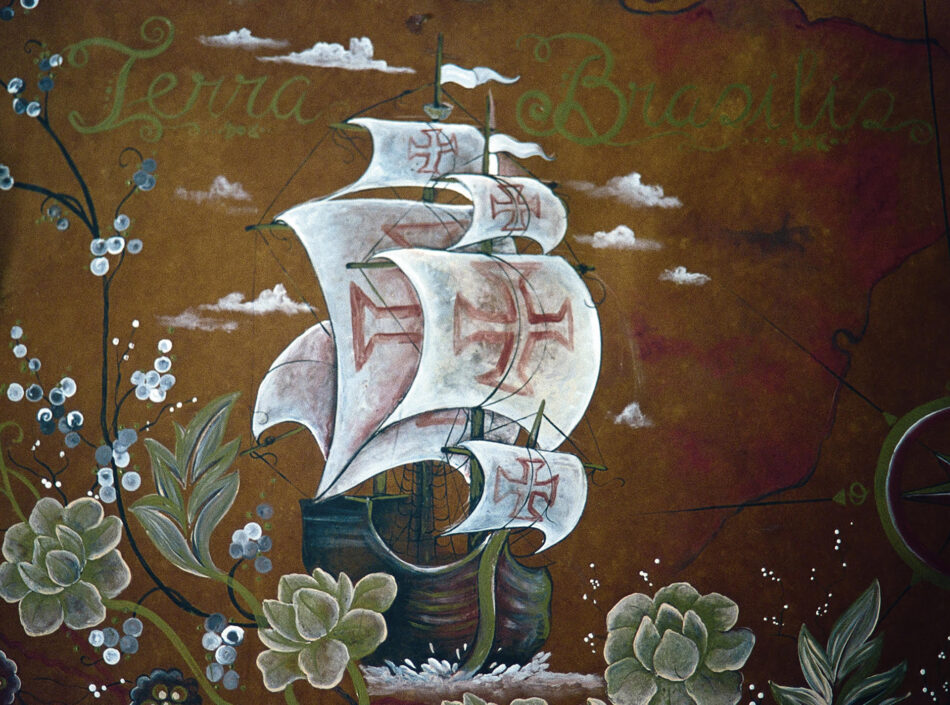
Image: Filipe dos Santos Barrocas. [Untitled], from the series Sandice Erasma (2007-2027). Photo: Filipe dos Santos Barrocas.