on Ruy Luduvice
Dates: October 24 and 31, November 07, 14, 21 and 28, 2026
Saturday
Hour: 10h to 12h
Duration: 6 meetings
Audience: general interested parties
Investment: R$ 520,00 + fees
Online course
Live, via video conferencing platform
Recorded classes available for a limited time only
Includes certificate at the end
For Libras interpreter, request by email cursos@mam.org.br with 7 business days' notice.
This course presents an introduction to video art, starting with its history and balancing analyses of the broader context with the study of specific works. We will begin in the 1960s, when video spread through the art scenes of Germany and the United States. Then, we will trace its evolution in dialogue with performance art, the... Happening ...and cinema, up to its inclusion in the contemporary art system and the transition to digital in the early 21st century.
Agenda
Lesson 01 – What is video?
Objectives: To understand what magnetic tape is, how it emerged in the audiovisual industry in the 1950s and 1960s, how it reached the market, and how it was used by the neo-avant-garde artistic movements in the 1960s.
Class 02 – Nam June Paik and the Fluxus Group
Objectives: To conduct a case study on the topic of the first class, following the trajectory of Nam June Paik from his contact with Stockhausen, Joseph Beuys, and especially with the neo-Dadaism of John Cage and the Fluxus Group.
Lesson 03 – Video and Performance
Objectives: To understand how video art developed alongside the emergence of performance art in the 1960s and 1970s, when artists began using video as part of their work. We will analyze works by Vito Acconci, Bruce Nauman, Marina Abramović, and Richard Serra.
Lesson 04 – Video, expanded cinema and the contemporary art system
Objectives: To understand how artists challenge the traditional spaces of cinema and art galleries. They question the forms of attention promoted by the cultural industry, exploring the difference between linear and fragmented narrative, as well as playing with time in their works. We will analyze works by Andy Warhol, Bill Viola, Francis Alÿs, Harun Farocki, and Cao Fei.
Lesson 5 – Video in the Brazilian art scene
Objectives: To understand how the Brazilian military dictatorship influenced the reception of video in Brazil between the 1970s and the early 1980s. We will also study the relationship between the so-called "enjoyment" generation, video, and television. Analysis of works by Letícia Parente, Rafael França, Sonia Andrade, TVDO, and TV Viva.
Lesson 06 – Video in contemporary Brazilian art
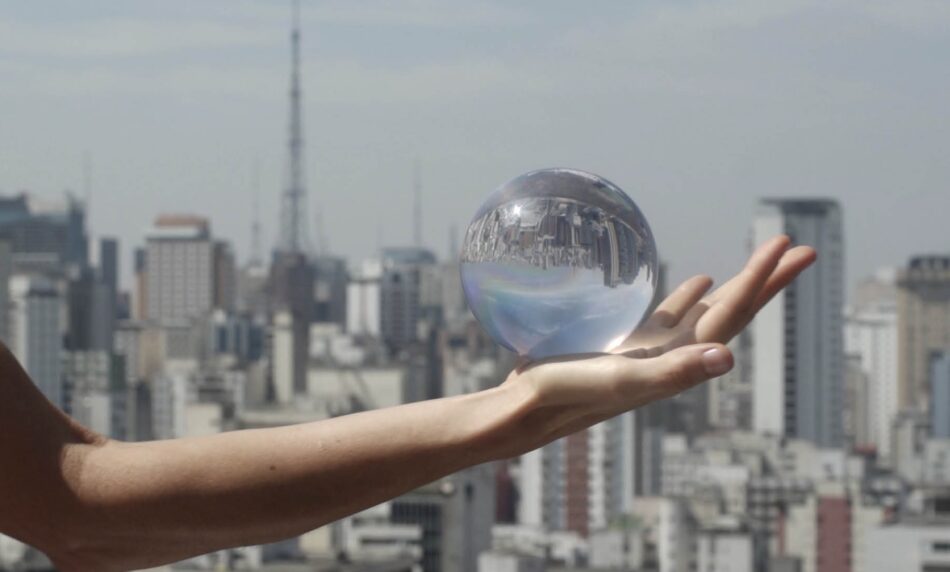
Objectives: To learn about video production in Brazil since the 21st century, using the exhibition “MAM at the Cinematheque: Body and City in Motion – videos from the Chaia donation(2025, curated by Cauê Alves and Miguel Chaia). We will see how these videos relate to poetic creation and analyze how artists work with artistic images in a context of high consumption of digital images. Analysis of the works “Luz del Fuego” (2012), by Carmela Gross; “Sin Peso” (2006), by Cao Guimarães; “Americano” (2013), by Berna Reale; “Aleph” (2013), by Lia Chaia; “Cruzada” (2010) by Cinthia Marcelle; “Físico” (2015), by Rodrigo Cass; “Etrom uo Aicnêdnepedni” (2022), by Guilherme Peters; “Odiolândia” (2017), by Giselle Beiguelman; and “Monólogo” (2021) by Nicole Kouts.
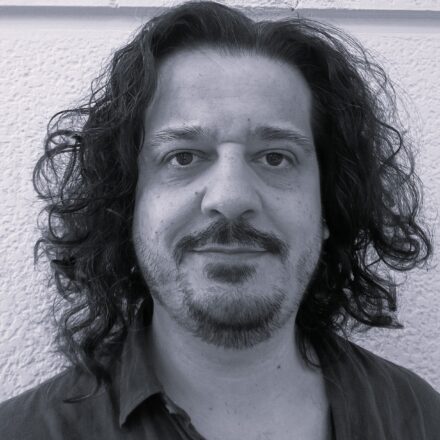
Ruy Luduvice
MAM friend There's a 20% discount. Be part!
Students, teachers and retirees have a 10% discount
Doubts:
cursos@mam.org.br
WhatsApp: 11 99774 3987
By participating in this activity/event, you authorize, free of charge and permanently, the São Paulo Museum of Modern Art to use your image, voice, biographical data, and distinctive features, captured in video, audio, photography, and prints, for the purposes of recording, disseminating, and promoting the institution's activities, in any means, vehicles, supports, media, methods, and technologies, whether tangible or intangible. If you do not wish your image to be disclosed, please inform the Museum of Modern Art of São Paulo by email. cursos@mam.org.br.
credits
Image: Lia Chaia, Aleph [frame from video]. MAM São Paulo Collection. Still: Marina Paixão