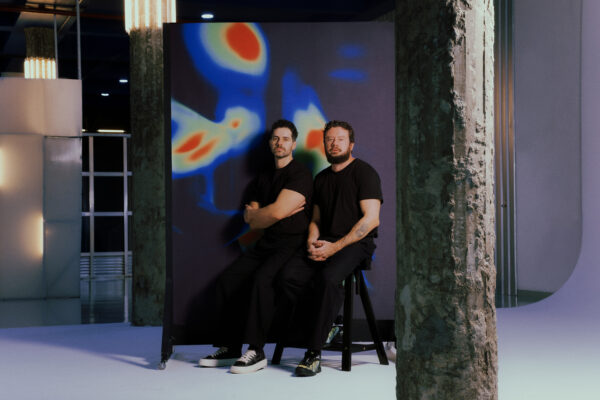
on Lívia Aquino, Fábio Morais and Daniela Avelar
Dates: May 25th, June 01st, 08th, 15th, 22nd and 29th, July 06th and 13th
Saturday
Hour: 10h to 12h
Duration: 08 meetings
Audience: general interested parties
Investment: R $ 640,00
Classroom course
Course includes certificate at the end
Formed by Lívia Aquino, Fabio Morais and Daniela Avelar, Collapse of Texts is an autofiction that combines research and artistic experimentation, focusing on the specificities, frictions and formal multiplicities of verbal language in the visual arts.
This course explores different modes of writing in art, through case studies and analysis of works, with an emphasis on their different natures of textual construction: from sound expression and performance to varied procedures, and the consideration of materialities and spatialities in art .
Agenda
Class 01 – Ways of writing in art (Daniela Avelar, Fabio Morais and Lívia Aquino)
- Course presentation
- Collective discussion based on triggering questions about different ways of writing in the visual arts
Class 02 – Minimal writing (Fábio Morais)
Minimal writings are more enunciative than argumentative, oscillating between lyrical, communication or the semantic-literal presence of words. For momentary reading, they have greater visual appeal than long texts, given the plasticity of expository practices. The class addresses material formalizations and presentation strategies for minimal writing, word-phrases and short statements in works by Hélio Oiticica, Rubens Gerchmam, Santiago Sierra, Carmela Gross, Lívia Aquino, Paulo Nazareth, Vânia Mignone, Daniela Avelar, Denilson Baniwa , Regina José Galindo.
Class 03 – Literary spaces within exhibition spaces (Fabio Morais)
Texts with longer reading/listening duration enable practices that are uncommon in art, such as narrative and fiction. Enjoyed slowly and circumspectly, they alter the temporality and the relationship with the exhibition space. The class analyzes formal text procedures that, although they could have a permanent place on pages and screens, are established in three-dimensional space. Works by Randolpho Lamonier, Dora García, Rafael RG, David Wojnarowicz, Aníbal López, Adrian Piper, Jota Mombaça, Rosângela Rennó, Zoe Leonard, Marta Neves, Giselle Beiguelman, Esther Ferrer are covered.
Class 04 – Instructions for imagining (Daniela Avelar)
Based on the idea of instructions, in artists such as Yoko Ono, Fluxus, George Brecht, Lawrence Weiner, Luis Camnitzer and Paulo Bruscky, the class addresses the unrealizable dimension of these texts. By not implementing these instructions, the texts acquire poetic-literary characteristics, activating images in the cognitive and mental field.
Class 05 – Instructions for acting (Daniela Avelar)
Addressing another dimension of instructions, the class proposes the discussion of works in which texts are, in the artist's process, triggers for the material realization of works in actions and performances, which will be constituted according to the contingency of each realization. Works by Sophie Calle, Eleonora Fabião, Esther Ferrer and Dora García, among others, will be covered.
Class 06 – Reading and performance (Lívia Aquino)
In “The art of performance theory and practice”, artist Esther Ferrer investigates reading as an action, exploring different uses and meanings in the field of art. This class departs from this performance as an axis to observe other artistic propositions that activate reading processes in different ways, such as shared reading aloud, in silence, in spaces designed for this, in others created by groups, thus pointing to the text that happens as sound space with artists such as Ana Gallardo, Rubiane Maia, Dora García, Ana Teixeira, Kevin Simón Mancera, Vera Chaves Barcelos, Adelaide Ivánova, Anibal López, Grupo Contrafilé and Grada Kilomba.
Class 07 – Writing, word-scenario and public space (Lívia Aquino)
Explore writing as a synthesis and how it operates in the different spaces and supports where it happens, from Jenny Holzer with the truisms spread throughout the city that suggest a type of language exhaustion to more recent artists glued to their political reality, such as Regina José Galindo, Alfredo Jaar, Juan Carlos Romero, Santiago Sierra, Doris Salcedo, Carmela Gross, Barbara Kruger and Guerrilla Girls.
Class 08 – Closing (Daniela Avelar, Fabio Morais and Lívia Aquino)
Raising questions about the topics covered throughout the course and proposing a practical writing exercise.
Daniela Avelar
Fabio Morais
Lívia Aquino
MAM friend has 20% discount. Be part!
Students, teachers and retirees have a 10% discount
Doubts:
cursos@mam.org.br
WhatsApp: 11 99774 3987
By participating in this activity/event, you authorize, free of charge and definitively, MAM – Museu de Arte Moderna de São Paulo, to use your image, voice, biographical data and characteristic signs, captured in video, audio, photography and prints, for the purposes of recording, disseminating and promoting the Museum's activities, in any means, vehicles, supports, media, methods and technologies, tangible or intangible. If you do not want your image to be published, please inform MAM (cursos@mam.org.br).
credits
I am Dolores (1999), by Carmela Gross | MAM São Paulo Collection