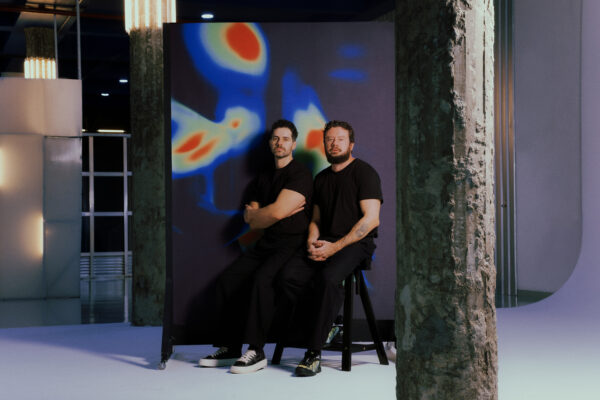
on Ana Avelar
Dates: February 25, March 04, 11, 18, and 25, and April 11, 2026
Wednesdays (except for the last meeting, which will be on a Saturday afternoon)
Hour: 19h to 21h
Duration: 6 meetings
Audience: general interested parties
Investment: R$ 480,00 + fees
Online course
Live, via video conferencing platform
Recorded classes available for a limited time only
Includes certificate at the end
This course offers a critical introduction to the field of curatorial activism, with a focus on Brazil. Over six sessions, the role of curating as a political practice will be explored, reviewing hegemonic structures of... Art History and proposing inclusive and decentralized approaches.
In each class, using historical and contemporary case studies, participants will be invited to analyze paradigmatic exhibitions and consider how curatorial practices can act as devices for resistance, reflection, and institutional transformation. The course is aimed at students, researchers, curators, educators, and anyone interested in art, curating, and contemporary culture.
Agenda
Lesson 1: Introduction to Curatorial Activism
- Conceptualization and emergence of curatorial activism;
- Three curatorial strategies according to Maura Reilly: revisionism, area studies, and relational studies;
- Canon and historiographical revisions;
- Curatorship as an ethical practice.
Lesson 2: Strategies of Curatorial Activism
- Institutional ruptures and expository thinking;
- New modes of curatorial practices;
- Hegemony and exclusion in the art system.
Case studies:
Magiciens de la Terre (Jean-Hubert Martin, 1989) — a paradigmatic exhibition that brought together artists from all over the world on common ground, questioning the centrality of the West in the art system.
When Attitudes Become Form (Harald Szeemann, 1969) — a landmark in experimental exhibitions that transformed museum spaces into studios.
Lesson 3: On-axis and off-axis: considering cases from Panorama
- A brief history of the Panorama of Brazilian Art (since 1969)
- Notable curations and changes over time
- Debates on representation and institutional politics
Case studies:
34th Panorama of Brazilian Art: From the stone From the land From here, curated by Aracy Amaral, co-curated by Paulo Miyada
30th Panorama of Brazilian Art: Contradictory, curated by Moacyr dos Anjos
Lesson 4: Mapping Activist Curatorships in Brazil
- Experiences outside the Rio-São Paulo axis;
- Institutional resistance and independent curatorial practices;
- Curatorship as a collective, collaborative, and situated practice;
- Digital and hybrid exhibitions.
Case study:
System update – a collaboratively curated exhibition on technodiversity, organized by the Curatorial Academy Research Group, coordinated by the professor, at the National Museum of the Republic in Brasília.
Lesson 5: Curating with historical responsibility and as an ethical practice
- Curatorship as the construction of narratives;
- The notion of polyphonic exposition;
- The role of curating as a critical and political practice.
Lesson 6: Visiting the exhibition as an on-site case study
Ana Avelar

MAM friend has 20% discount. Be part!
Students, teachers and retirees have a 10% discount
Doubts:
cursos@mam.org.br
WhatsApp: 11 99774 3987
By participating in this activity/event, you authorize, free of charge and permanently, the São Paulo Museum of Modern Art to use your image, voice, biographical data, and distinctive features, captured in video, audio, photography, and prints, for the purposes of recording, disseminating, and promoting the institution's activities, in any means, vehicles, supports, media, methods, and technologies, whether tangible or intangible. If you do not wish your image to be disclosed, please inform the Museum of Modern Art of São Paulo by email. cursos@mam.org.br.
credits
Image: Fragment of kimberlite taken on the expedition of Geographic mutations: vertical border, by Cildo Meireles.