Dates: January 13th, 20th and 27th and February 03rd
Saturday
Hour: 10h to 12h
Duration: 4 meetings
Audience: general interested parties
Investment: R $ 320,00
Classroom course
Includes certificate at the end
In a comprehensive temporal panorama that extends from the 19th century to the present day, this course explores how specific groups of artists and writers conceived their works as subjective responses to the urban models imposed in their times. A common denominator among them is the intense use of physical experience as a creative strategy: walking, drifting, mapping, reporting and immersion in the crowd.
Crossing the centuries, from Baudelaire and João do Rio in the 1920th century, through Virginia Woolf, Flávio de Carvalho and the French surrealists in the 1968s, to Hélio Oiticica, Robert Smithson, Denise Scott Brown and combat situationism in the effervescent Paris from XNUMX, the course culminates in the investigation of contemporary artists and their new modes of urban experience, as they seek to understand and dialogue with the complexity of the city in the XNUMXst century.
Target audience: students and those interested in art and urbanism.
Agenda
Class 1 – Flanzas
- Crowd and anonymity
- Overthrow of the old centers and the new modern scene – the flâneur
- Charles Baudelaire (Paris)
- João do Rio (Rio de Janeiro)
Class 2 – Ambulations
- Estrangement and fleetingness
- Virginia Woolf (London)
- Flávio de Carvalho (São Paulo)
- Surrealist Group (Paris)
Class 3 – Drifts
- Participation and play
- Hélio Oiticica / Lygia Clark (Rio de Janeiro)
- Roberto Piva (São Paulo)
- Robert Smithson (New Jersey)
- Denise Scott Brown (Las Vegas)
- Guy Debord, situationism and the movements of 1968 (Paris)
Lesson 4 – Jumping between islands
- Which city to respond to?
- Sophie Calle (Paris)
- Jonathas de Andrade (Recife)
- Regina Parra (São Paulo)
- Francis Alÿs (Mexico City)
Caio Meirelles Aguiar
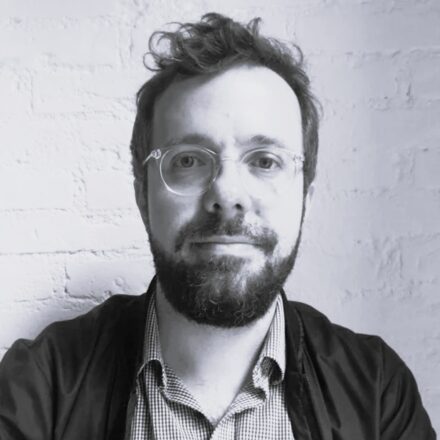
Caio Meirelles Aguiar is an architect with a postgraduate degree in criticism and curatorship and a master's degree in museology from PPGMus/USP, where he conducted research on contemporary art preservation and technological updates in video installations. He currently works on projects related to the management and exhibition of art and documentary collections, organizes courses, and writes about contemporary art.
MAM friend has 20% discount. Be part!
Students, teachers and retirees have a 10% discount
Doubts:
cursos@mam.org.br
WhatsApp: 11 99774 3987
By participating in this activity/event, you authorize, free of charge and definitively, MAM – Museu de Arte Moderna de São Paulo, to use your image, voice, biographical data and characteristic signs, captured in video, audio, photography and prints, for the purposes of recording, disseminating and promoting the Museum's activities, in any means, vehicles, supports, media, methods and technologies, tangible or intangible. If you do not want your image to be published, please inform MAM (cursos@mam.org.br). In some courses, classes that take place on the Zoom platform may be recorded and made available only to participants in those respective classes with an expiration date. The content of the recording is protected by copyright and access is permitted solely for study purposes and for the exclusive use of the participant, making it impossible to disclose or share with third parties.
credits
Regina Silviera, Urban Dstructuring 8, 1976. | MAM São Paulo Collection. Donation Patrocínio Petrobrás, 2001. Photo: Marcelo Arruda.