Second Floor
The longstanding partnership between the Museum of Modern Art of São Paulo (MAM São Paulo) and SESC São Paulo reaches a new milestone with the exhibition Look and See: MAM São Paulo Visits SESC Bom Retiro. Part of the MAM in Motion program—which brings works from the museum’s permanent collection into spaces that also house contemporary art exhibitions—the show reveals ways of making collections accessible to the public, bringing into dialogue institutional practices, educational initiatives, and various forms of cultural mediation.
Rather than offering template answers, Look and See challenges us to consider how our perception of the world changes when we stop to contemplate a work of art. To prompt this reflection, curators Mirela Estelles and Valquíria Prates have organized the exhibition in non-traditional spaces. MAM’s works are distributed across the various floors of the SESC Bom Retiro building, infiltrating artistic practice into the public’s daily use of the space. The project also reimagines SESC’s library as a laboratory for experimentation and research, supported by resources from the MAM Education Department such as tactile models and games. The exhibition is grounded in active listening, featuring recorded accounts from visitors, artists, and educators. Together, these voices create a plural narrative which suggests that the meaning of art is built through collective experience.
By placing these two collections side by side, the exhibition proposes more than just an institutional encounter; it becomes an active exercise in circulation and reflection based on their works. It also promotes an alignment through cultural mediation, contributing to the debate on how different audiences engage with both artworks and the cultural spaces that house and exhibit them. Look and See: MAM São Paulo Visits SESC Bom Retiro invites the public to experience art as a living, ever-changing field.
Elizabeth Machado
President of the Board of Directors, MAM São Paulo
Cauê Alves
Chief Curator, MAM São Paulo
Visitors to SESC São Paulo units often come across works from the SESC Collection of Art while moving through the spaces created for a wide range of activities. In the exhibition Look and See: MAM São Paulo Visits SESC Bom Retiro, the experience of visual art likewise unfolds as a journey. This kind of route can turn unexpected encounters with artistic objects into opportunities to engage with and pay attention to what gradually comes into view. Like any act of discovery, this experience requires a willingness to search, take wrong turns, and retrace one’s steps, learning through the process.
Bringing a group of works from the collection of the Museum of Modern Art of São Paulo (MAM São Paulo) to “visit” SESC Bom Retiro reinforces the idea that art collections are dynamic entities. These curated groupings shift in more ways than one: by moving into a new context, they open up fresh interpretations, interacting with new architecture, different artistic constellations, broader territories, and wider audiences. Promoting greater visibility for collections devoted to Brazilian art also renews the vitality of these spaces, allowing the works to generate new experiences and forms of knowledge.
Born from a partnership between SESC and MAM São Paulo, this exhibition aligns with both institutions’ commitment to expanding cultural access, helping audiences develop a deeper visual literacy through regular contact with works of art. Education in this sense does not mean instructing, but rather creating the conditions for each individual to develop their own ways of engaging with the artistic items. Within this context, mediation plays a vital role. It functions as a sphere for exchange, listening, and shared observation, where knowledge is shaped through the intersection of different expectations and cultural backgrounds.
Accessibility guides this journey as an overarching principle. By taking into account the many different ways one can perceive art, Look and See aims to keep the path open to everyone. It recognizes that each person brings their own measure and view of the world, and that it is through this very plurality that the experience expands. This is an invitation to look slowly, to pause for a while, and to notice that the impact of art resists haste and immediacy. Along the way, collections, mediation, and the public meet as participants in a journey that is both personal and collective, where meaning emerges step by step.
Luiz Deoclecio Massaro Galina
SESC São Paulo Regional Director
The exhibition Look and See: MAM São Paulo Visits SESC Bom Retiro is conceived through an encounter between works from the Museum of Modern Art of São Paulo (MAM São Paulo) and the SESC Collection of Art. It is organized around a provocative question: how can art become a public experience? By moving works from a museum into the everyday life of a multifaceted cultural center like SESC, the show foregrounds contemporary artistic production, structures of mediation that sustain exhibitions, and also ways of organizing, preserving, narrating, and bringing these underlying choices into view. Each change of setting gives rise to new relationships among the works in these collections, highlighting the fact that, for anyone, the perception of art is also shaped by personal experience, institutional decisions, and forms of mediation, leading us to questions such as: who determines what to show and how to show it? When, and from what perspective, are we invited to engage with these productions and speak about them?
The exhibition invites viewers to reflect on two questions that lie at the heart of the day-to-day work of cultural institutions: What happens when a decision is made to preserve a set of works and make them accessible to the public? And what can be perceived and understood in a work of art that allows the experience to become truly transformative on a personal level? The first question brings us closer to the institutions and their processes. The second focuses on the immediate experience of the artwork, on a subjective level.
In this sense, Look and See is based on the idea that, if every collection organizes ways of seeing the world, exhibitions deal with ways of organizing intentional and authorial relationships. In the cultural mediation processes involved in developing an exhibition, curatorial and education teams, in collaboration with communication areas, shape thought through space and across different media, creating points of contact between works, institutions, and audiences. What is on view always transcends the artworks themselves. It also comprises the narratives and fabulations, discourses and interpretation devices that accompany them: texts, audio materials, educational resources, the flow of the exhibition space itself, and the actual conversations between educators and visitors.
Faced with a work of art, one perceives its materiality, its surfaces, volumes, colors, and sounds. We recognize in it the result of technical choices, of specific processes of creation and narrative construction; it shows, expresses, represents, symbolizes, and argues—not necessarily in that order, nor always sustaining all of these sensitive gestures. Moreover, every artwork is a confluence of aesthetic and conceptual inquiry, embedded in history and culture. Understanding a work means accessing these layers and realizing that none of them can exhaust its meanings, since something always remains open to interpretations, memories, emotions, and the unexpected responses the encounter may bring. A work of art is constituted as experience, and perception is one way of knowing—one that also allows us to imagine, think, plan, and act.
Look and See unfolds as a field of relations. It begins by welcoming visitors arriving from the street, moves through various modes of circulation on the first floor and, on the second, delves into processes of creation, perception, and cultural mediation, culminating in the possibility of making and unmaking meanings. The exhibition happens in the in-between: in between preserving and showing, looking and seeing, choosing and engaging with others.
The exhibition Look and See: MAM São Paulo Visits SESC Bom Retiro is conceived through an encounter between works from the Museum of Modern Art of São Paulo (MAM São Paulo) and the SESC Collection of Art. It is organized around a provocative question: how can art become a public experience? By moving works from a museum into the everyday life of a multifaceted cultural center like SESC, the show foregrounds contemporary artistic production, structures of mediation that sustain exhibitions, and also ways of organizing, preserving, narrating, and bringing these underlying choices into view. Each change of setting gives rise to new relationships among the works in these collections, highlighting the fact that, for anyone, the perception of art is also shaped by personal experience, institutional decisions, and forms of mediation, leading us to questions such as: who determines what to show and how to show it? When, and from what perspective, are we invited to engage with these productions and speak about them?
In Look and See, the SESC Bom Retiro library houses a selection of cultural mediation tools developed by MAM Education Department for the museum’s exhibitions. Conceived as artistic and pedagogical resources, these materials invite the shared construction of meaning, sensorial exploration, and attentive observation. Through narrative-building strategies, conceptual challenges, and open-ended routes, the library becomes a site where art, learning, and community converge, reaffirming the exhibition as a living experience open to public exchange and participation.
Games, cards, objects, sensory devices, and close-looking exercises encourage collective engagement and critical reflection. Alongside these resources, the books published by MAM São Paulo on arts education and cultural mediation offer a range of perspectives drawing from the hands-on research and practices of museum education.
The tactile versions of artworks from the MAM São Paulo collection, available at the counter outside the library, were created by artist and researcher Marina Baffini together with Ateliê Inclua-me. Through relief, texture, scale, and different materials, these pieces translate the museum’s collection into tactile experiences, opening up new ways of accessing, perceiving, and interpreting the original artworks.
Dialogues with Color: Color Creation and Painting Lab
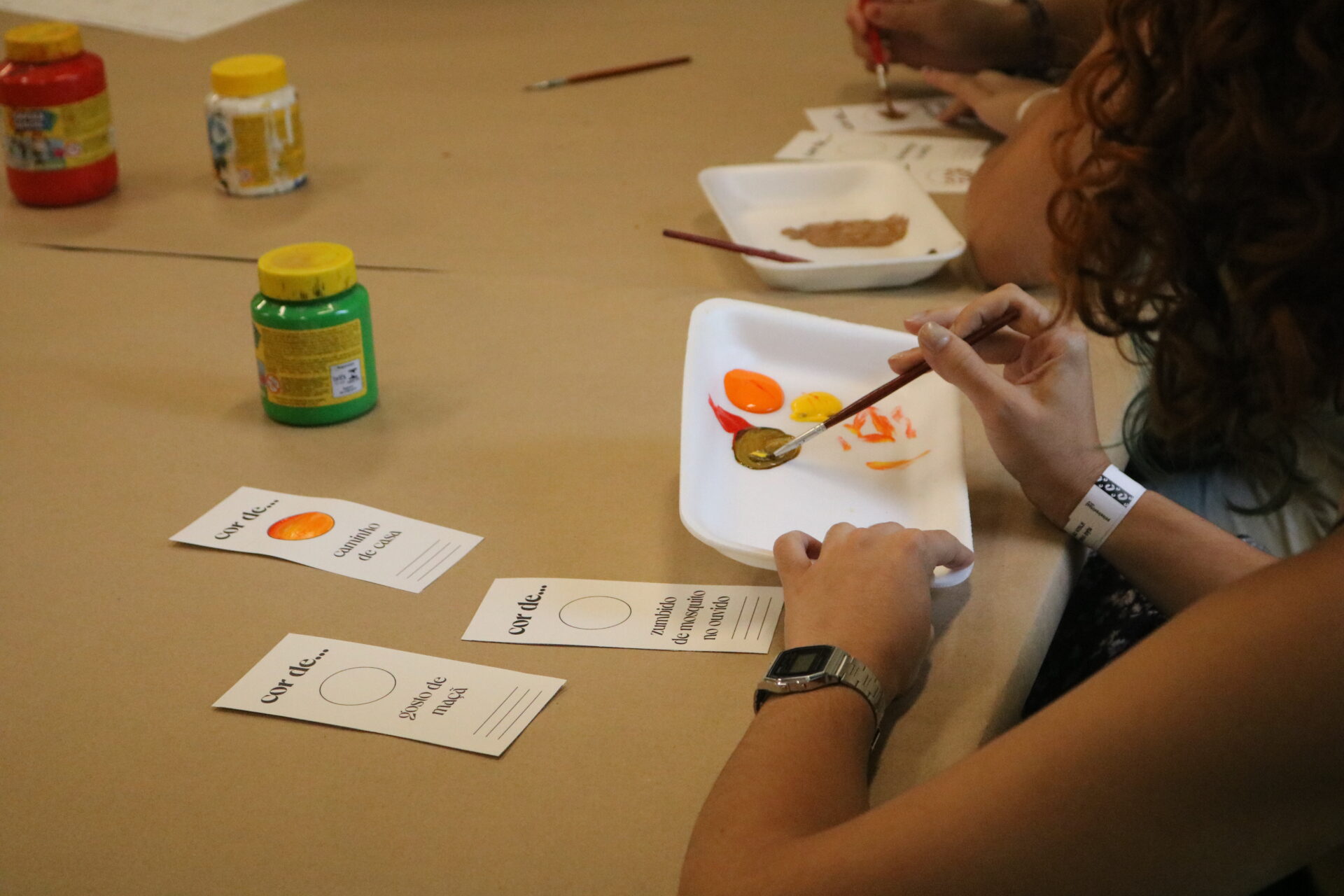
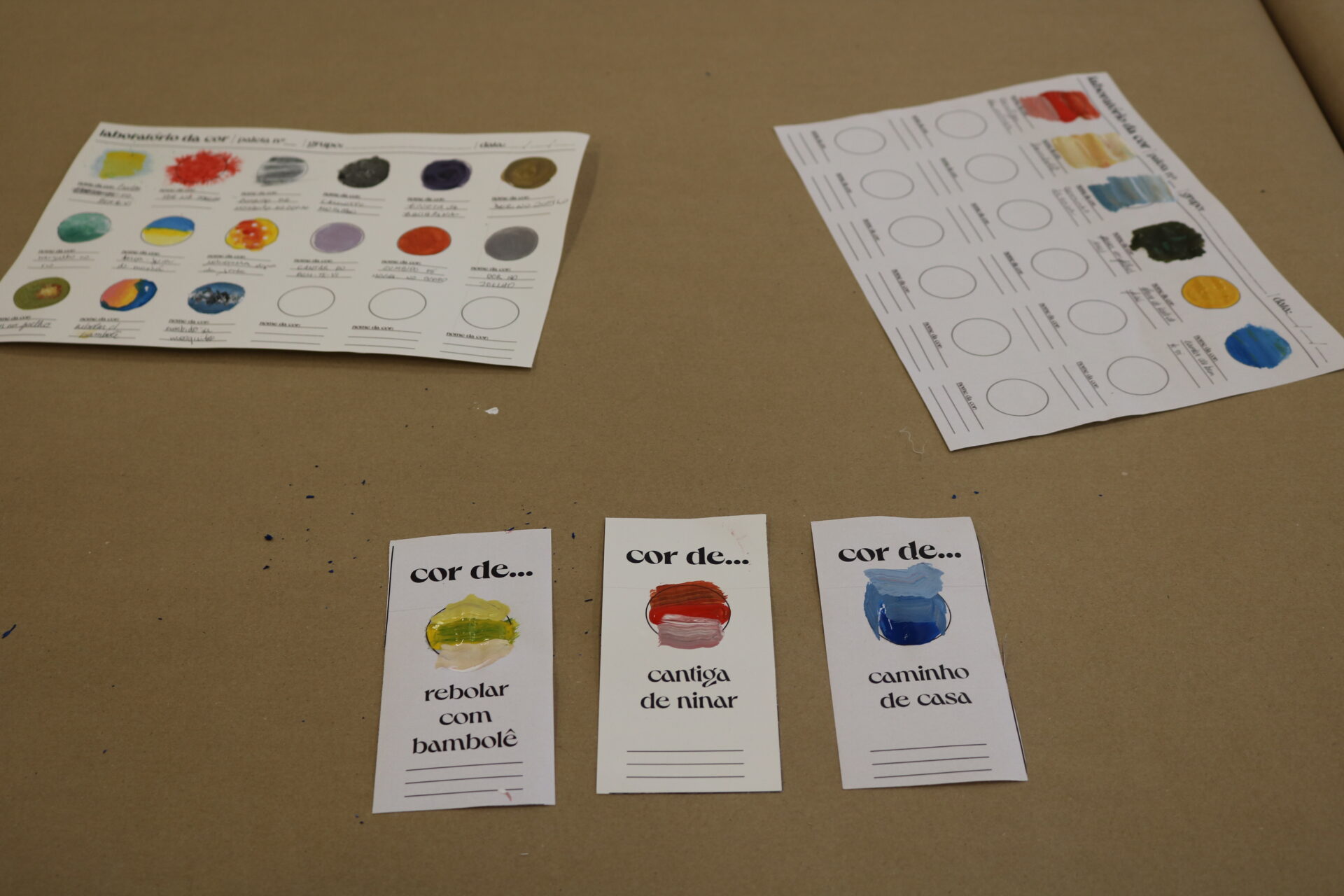
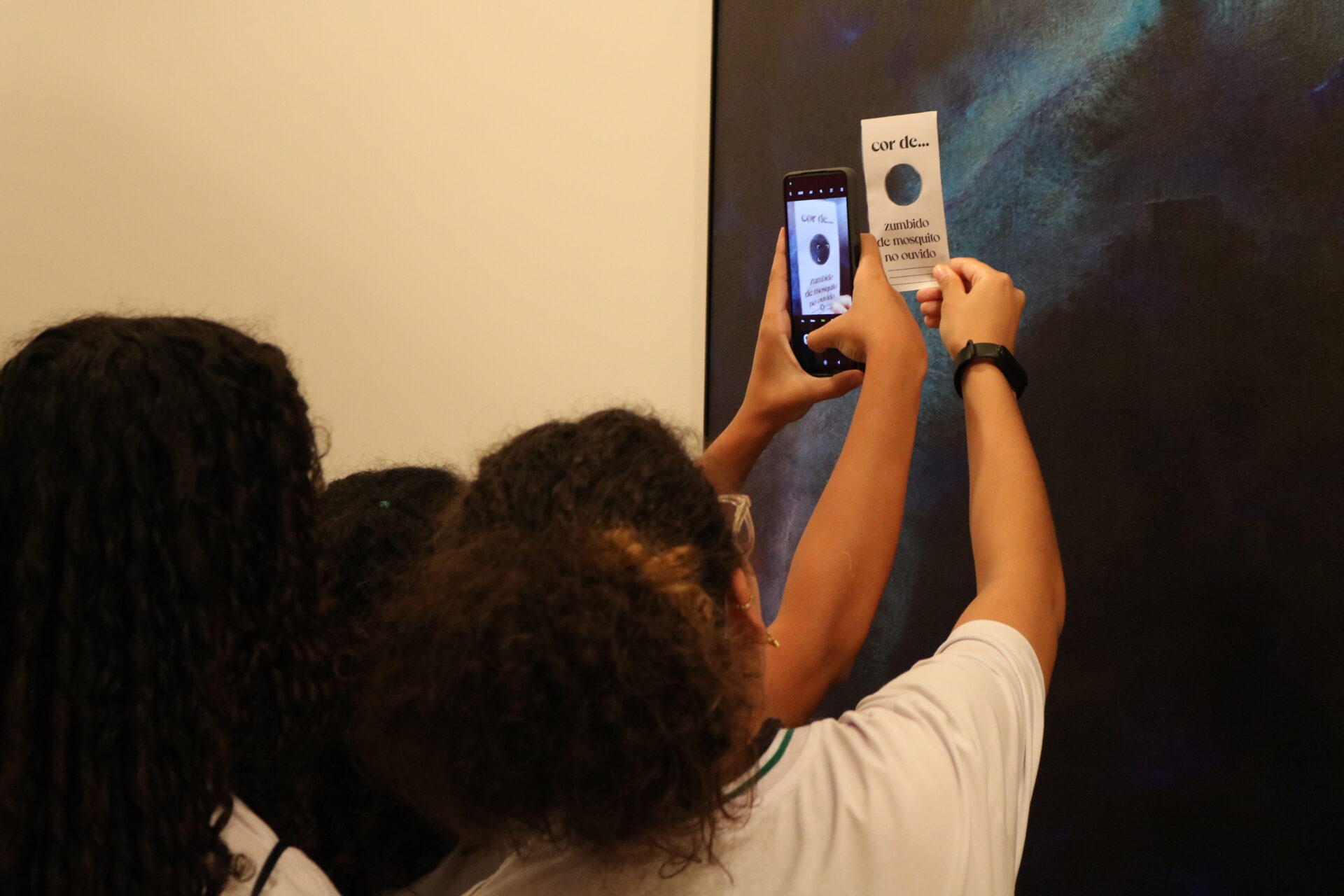
Developed by educator Amanda Santos for the exhibition Dialogues with Color and Light (2023), this game offers a poetic, sensory exploration of color. Participants are invited to connect colors with emotions, memories, and elements from everyday life, expanding the relationship between perception and intuition.
The game can be played in two ways. In Color Hunt, participants use the card as a “window” to explore their surroundings, finding objects or textures that match the prompt and documenting what they find through photography. In Color Alchemy, participants mix paints to create the color suggested by the cue card, recording the resulting “formula” on the back of the card. In a group setting, players can combine their results to form a collective palette.
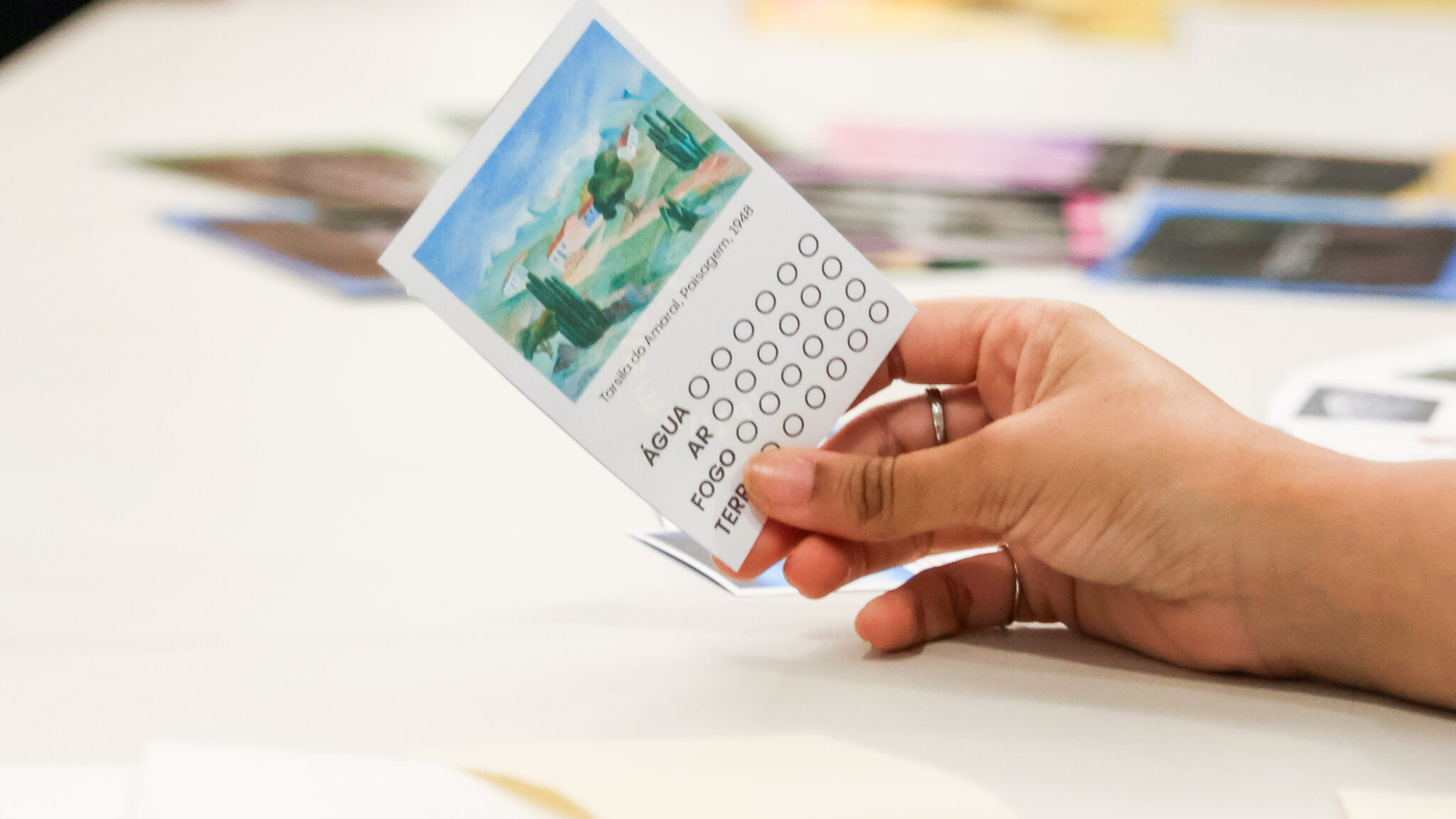
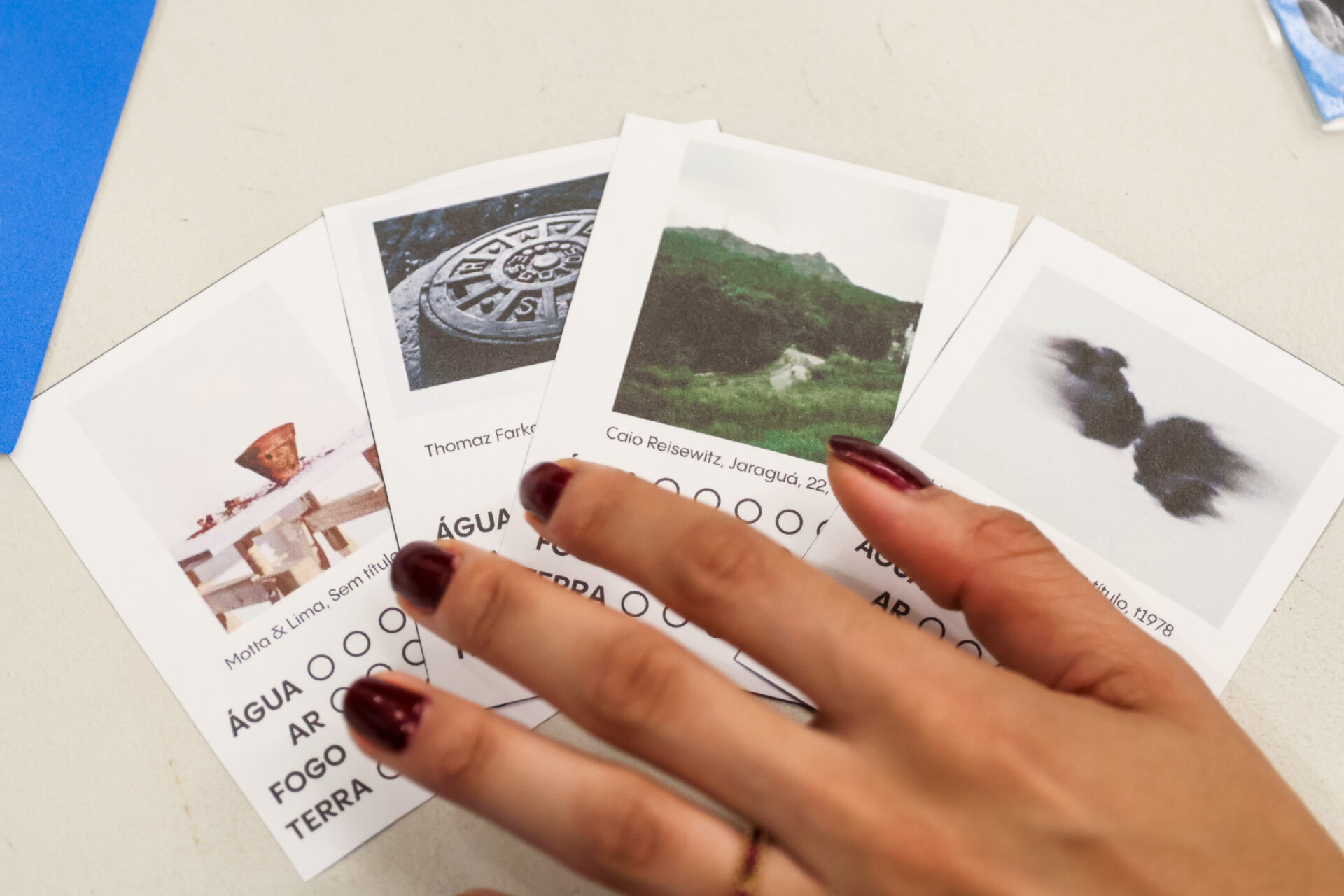
Elemental Trump
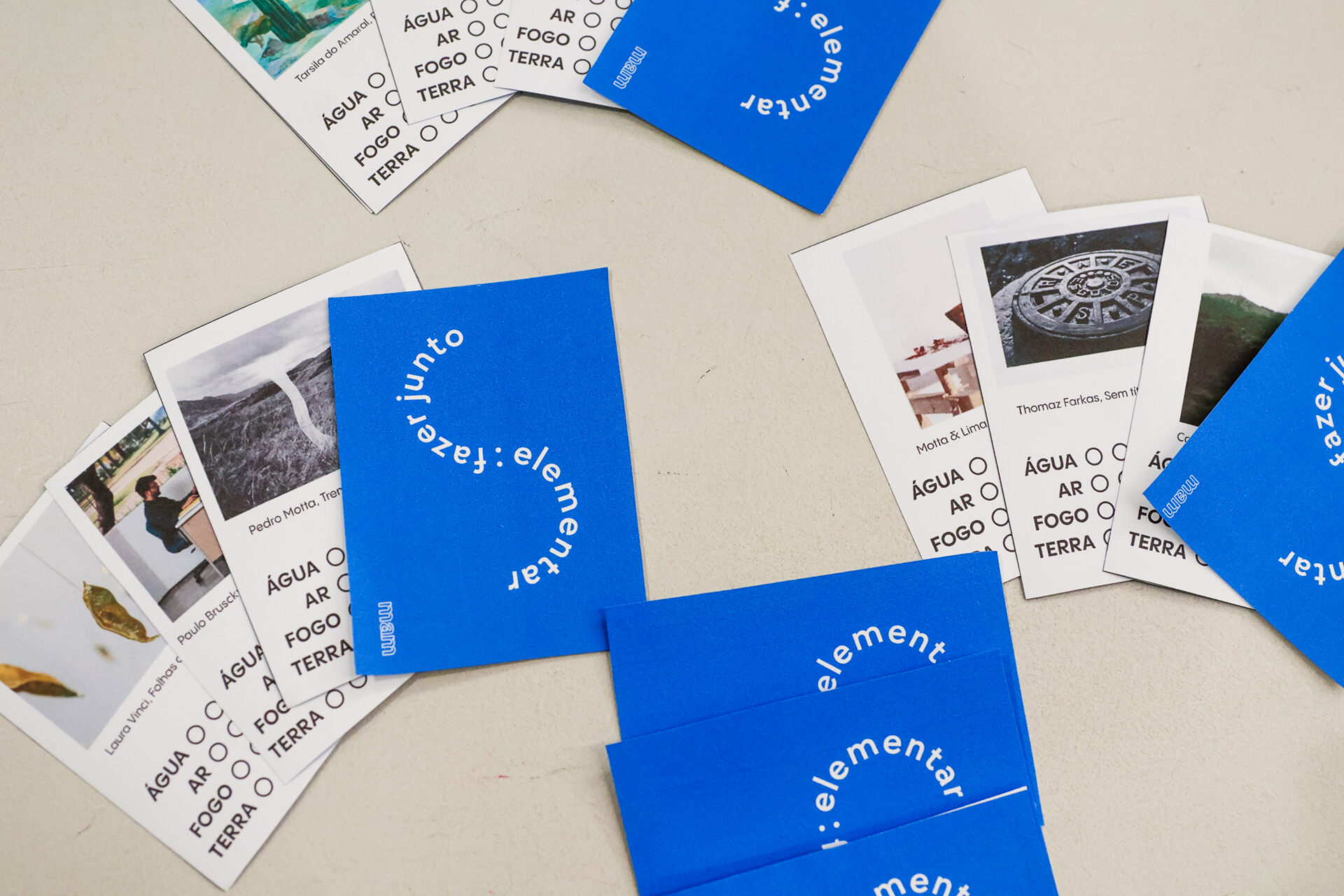
This is a game of observation and strategy that invites players to analyze artworks drawing on the four elements of nature: water, air, fire, and earth. Developed by educator Amanda Santos for the exhibition Elementary: Doing it Together (2023), it transforms the visitor’s own perspective into a scoring criterion, encouraging a critical and subjective analysis of the show. The activity is divided into two stages. First, participants build the deck. They move through the exhibition and fill out blank cards by assigning scores from 1 to 6 for each element, according to how strongly they perceive its presence in the artworks they come across. In the second stage, using the completed cards, participants compete in a classic trump-card game. The player with the highest value in the chosen element wins the round and captures the opponents’ cards. The goal is to win the entire deck and become the master of the elements.
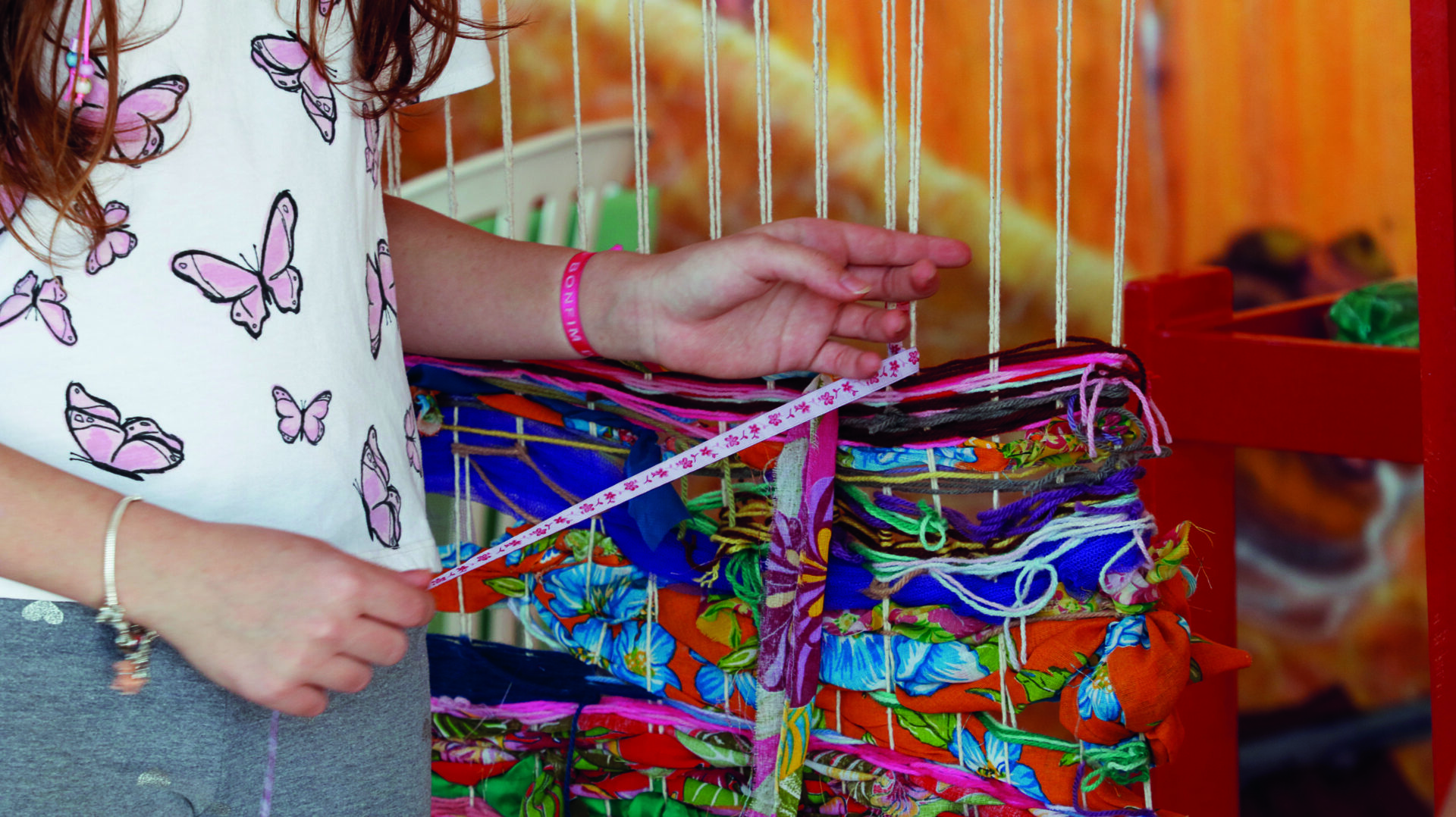
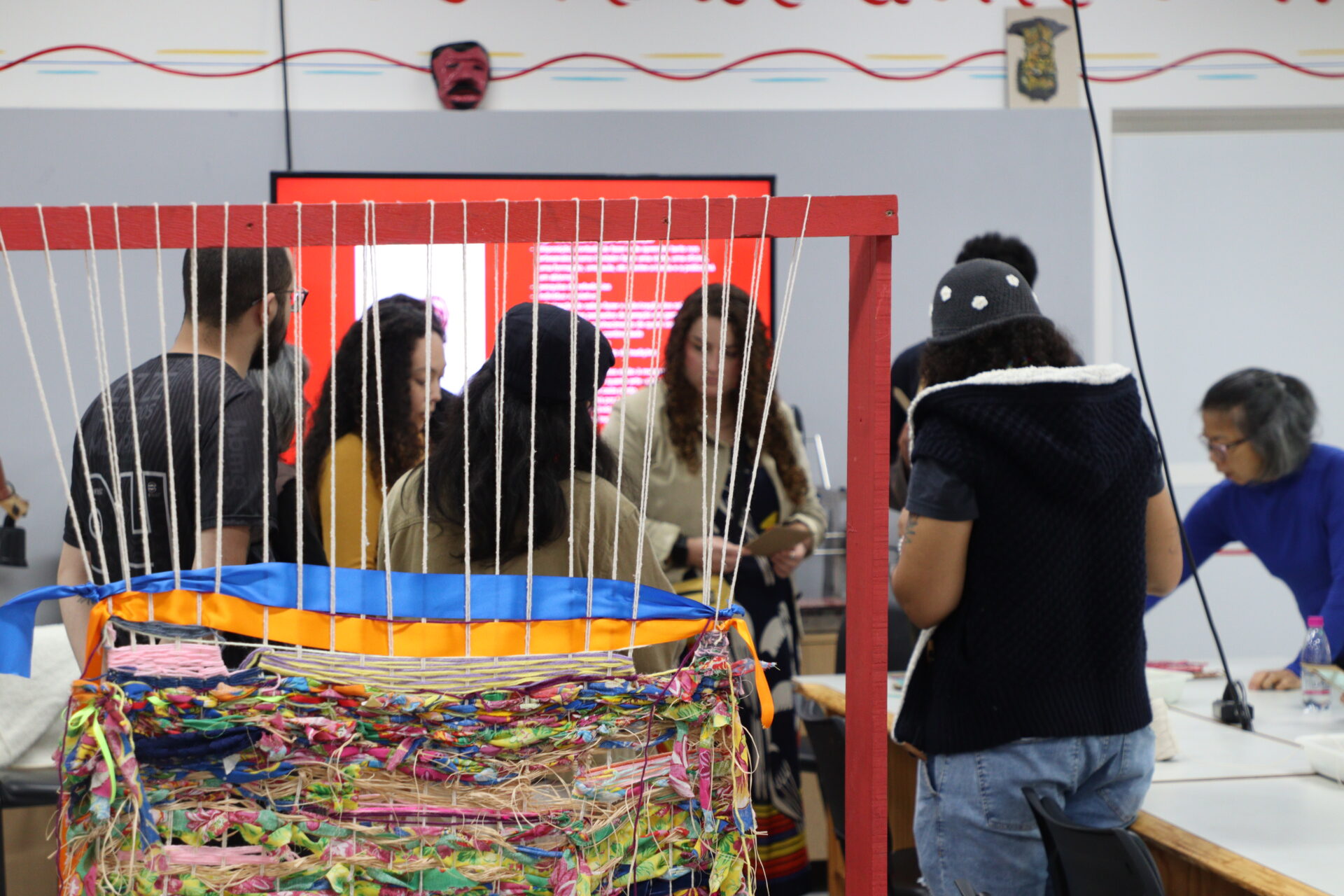
The Collective Loom
Developed by educator Amanda Falcão for the exhibition The Firebirds Will Take Flight Again: The Woven Forms of Jacques Douchez and Norberto Nicola (2021-2022), with the collaboration of Venício Monteiro in the creation of the wooden structure, this game invites participants to engage with and reflect on artisanal making processes. The activity is led by an educator, using flexible and adaptable forms of mediation. Following an introduction to the loom and to the warp and weft threads, participants are encouraged to try their hand at weaving. Activities may include sharing memories, creating collective narratives, or weaving together, exploring both the challenges and possibilities of collaborative practice.
Adinkra and Music Cards
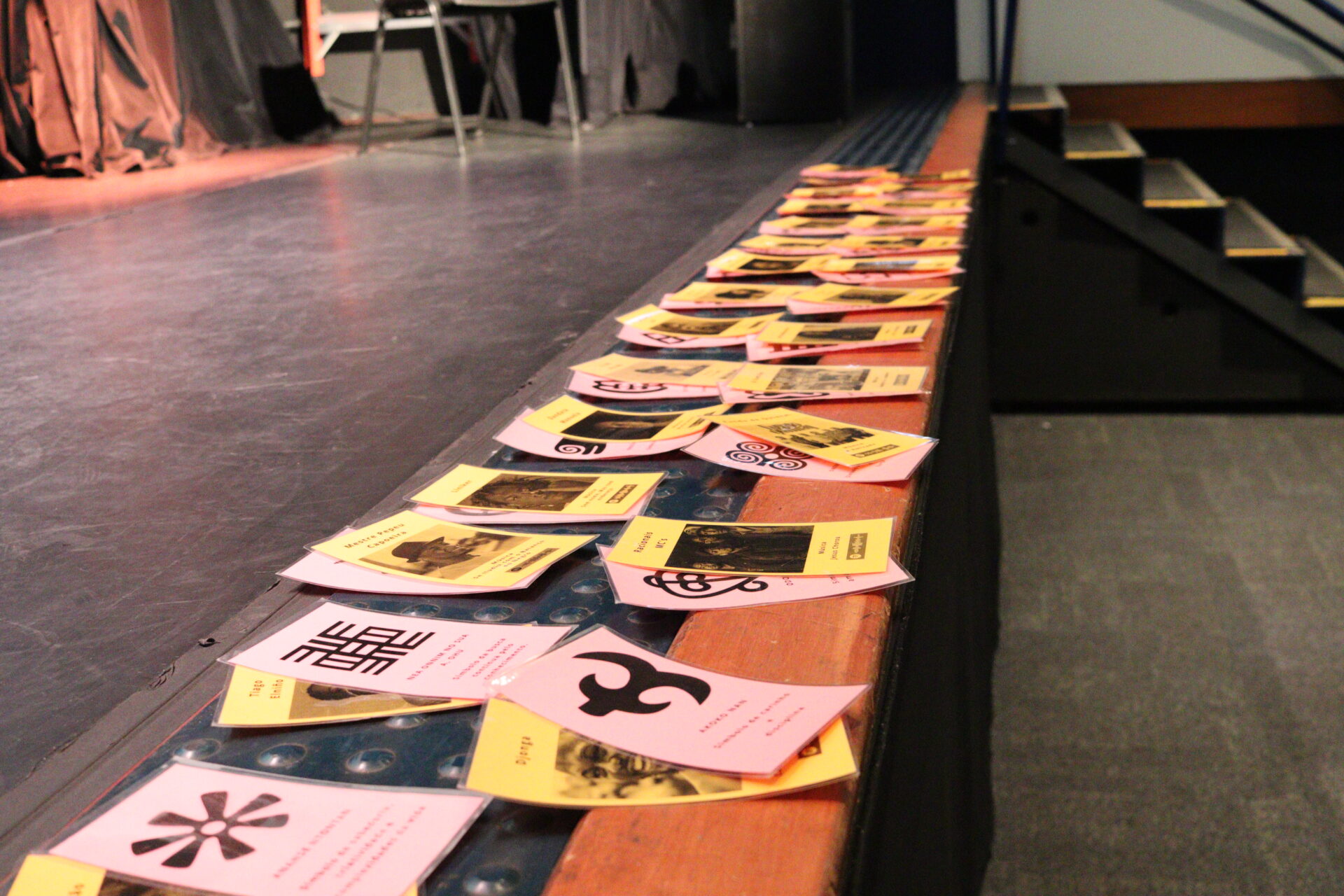
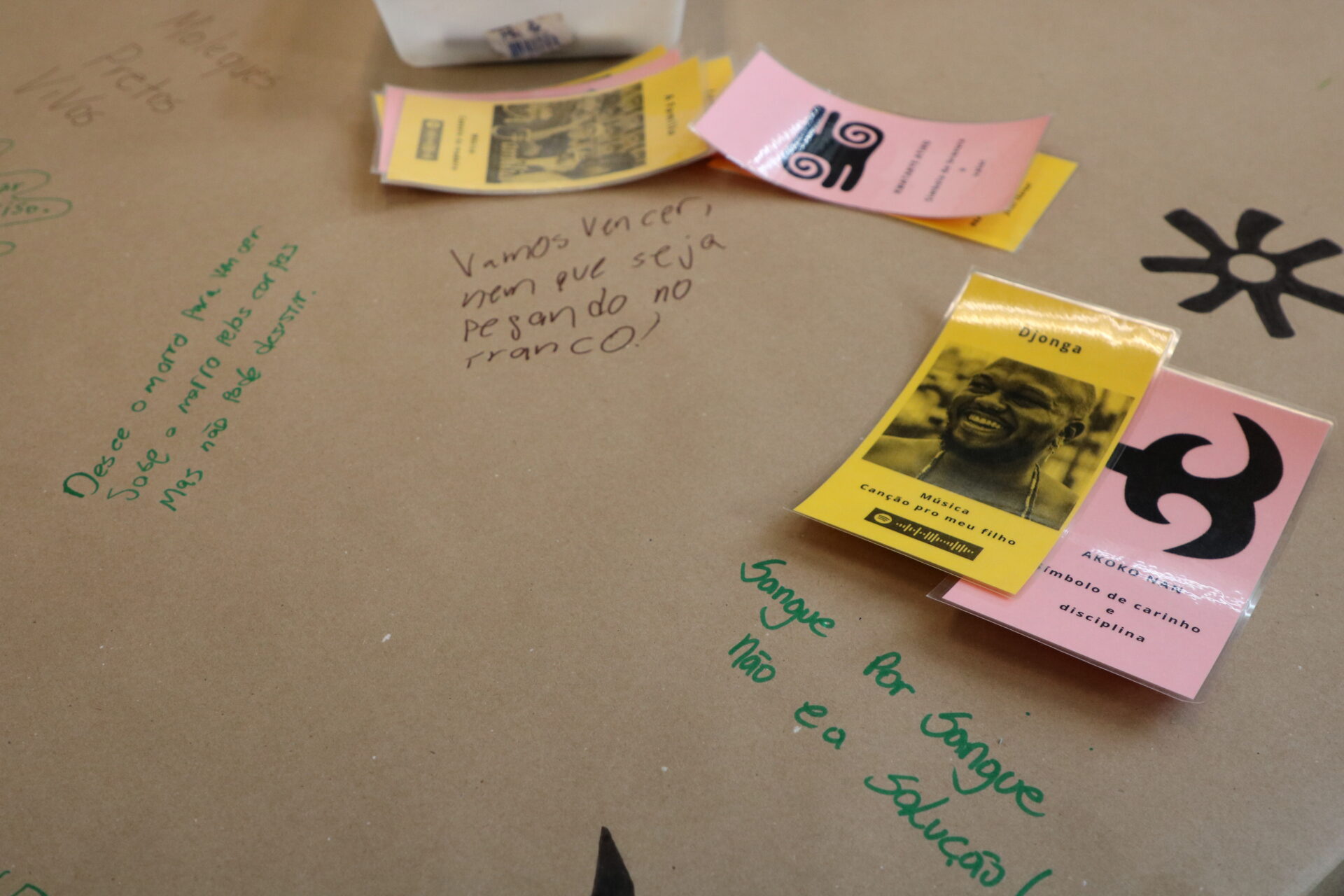
Created by educator Pedro Queiroz for the exhibition Hands: 35 Years of the Afro-Brazilian Hand (2023-2024), this card game features Adinkra symbols (an ideographic system created by the Akan people of West Africa) and songs by Black Brazilian artists across generations. Participants are divided into small teams, and each team receives an Adinkra card and a music card. The challenge is to explore how the symbols and songs might relate to the artworks on view. After exploring the exhibition, the groups share their choices, reflecting on the connections they have made and on possible dialogues with other symbols and songs.
Elementary Words
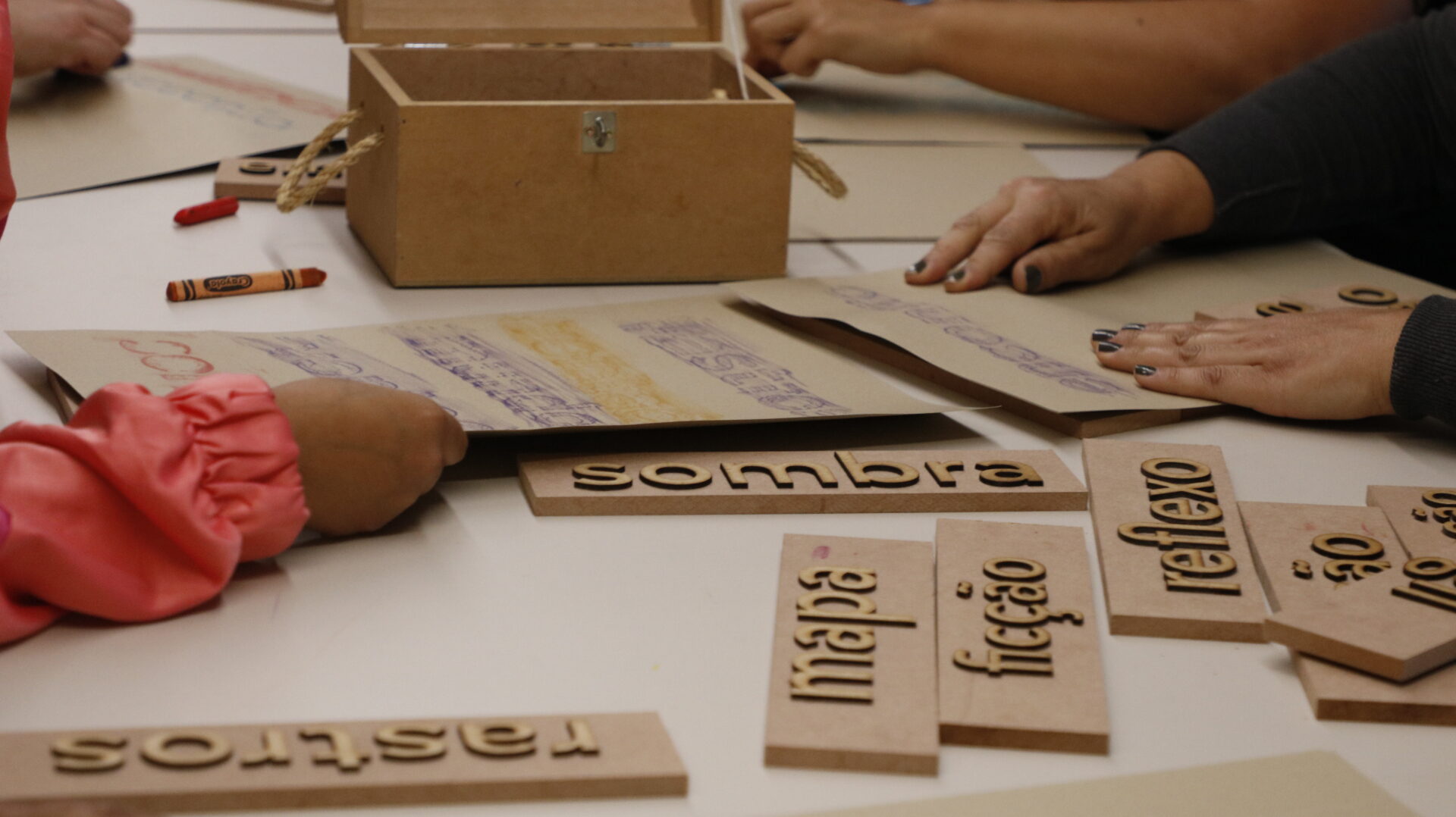
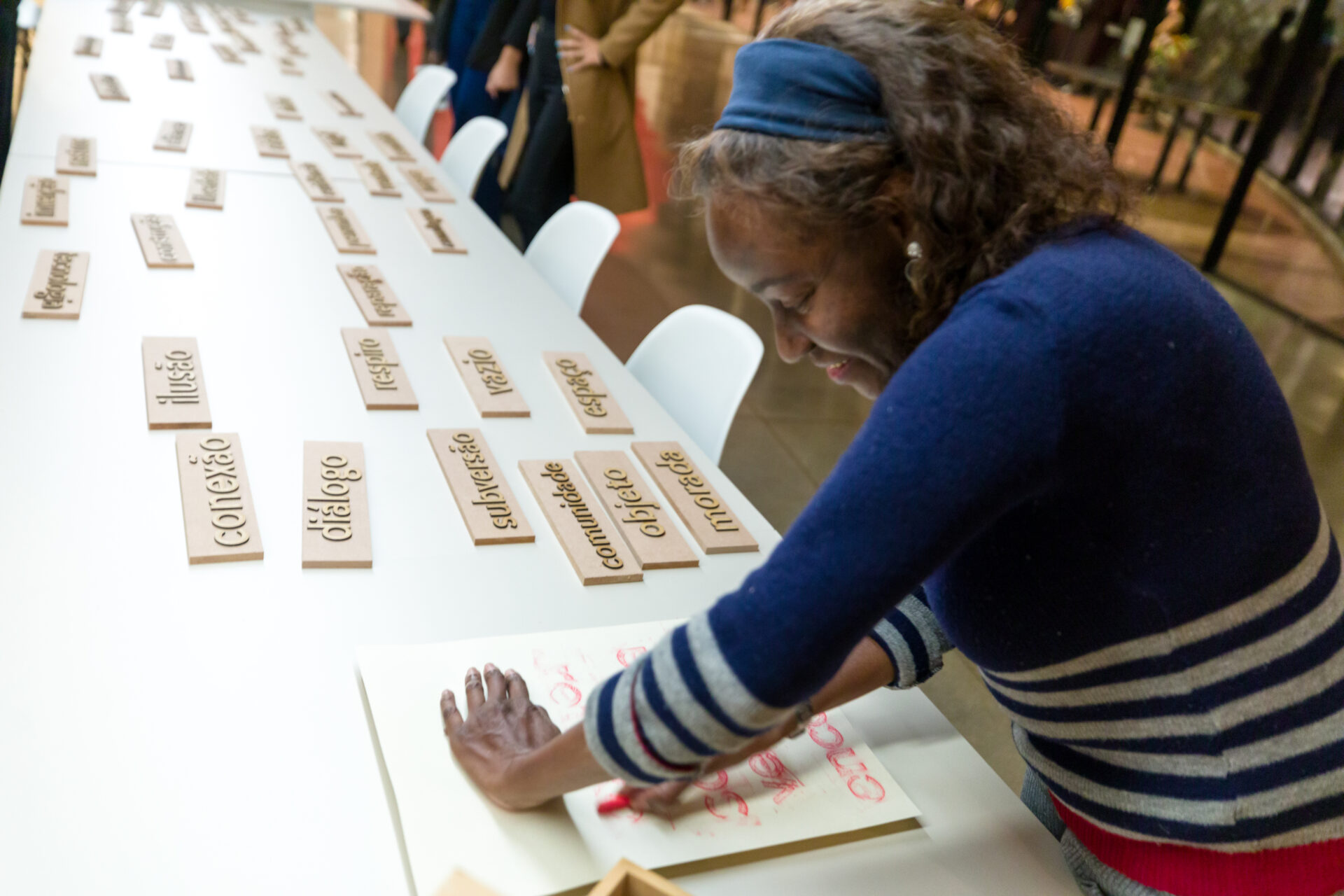
This game was created by the MAM Education Department for the exhibition Elementary: Doing it Together (2023). Participants are invited to create connections, meanings, and readings of the exhibition space based on words that resonate subjectively with the works on view. The activity is led by an educator and can take different forms: words can be drawn at random or specifically chosen to guide how visitors look at and engage with the artworks. Participants can also weave collaborative stories together, each contributing a word of their own. As a follow-up, groups may experiment with frottage, exploring new forms of expression and perception.
The Thousand-Degree Tarot
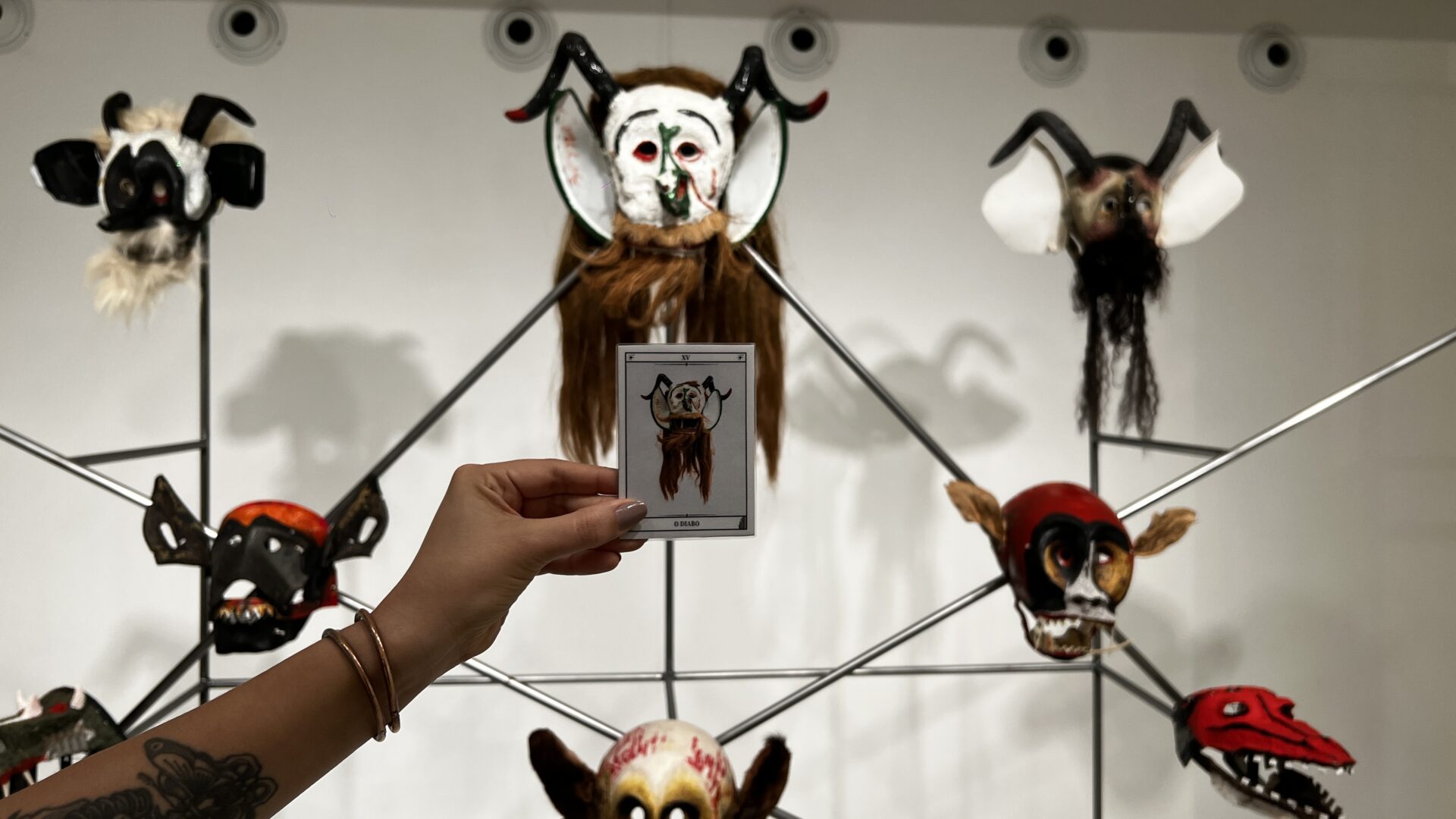
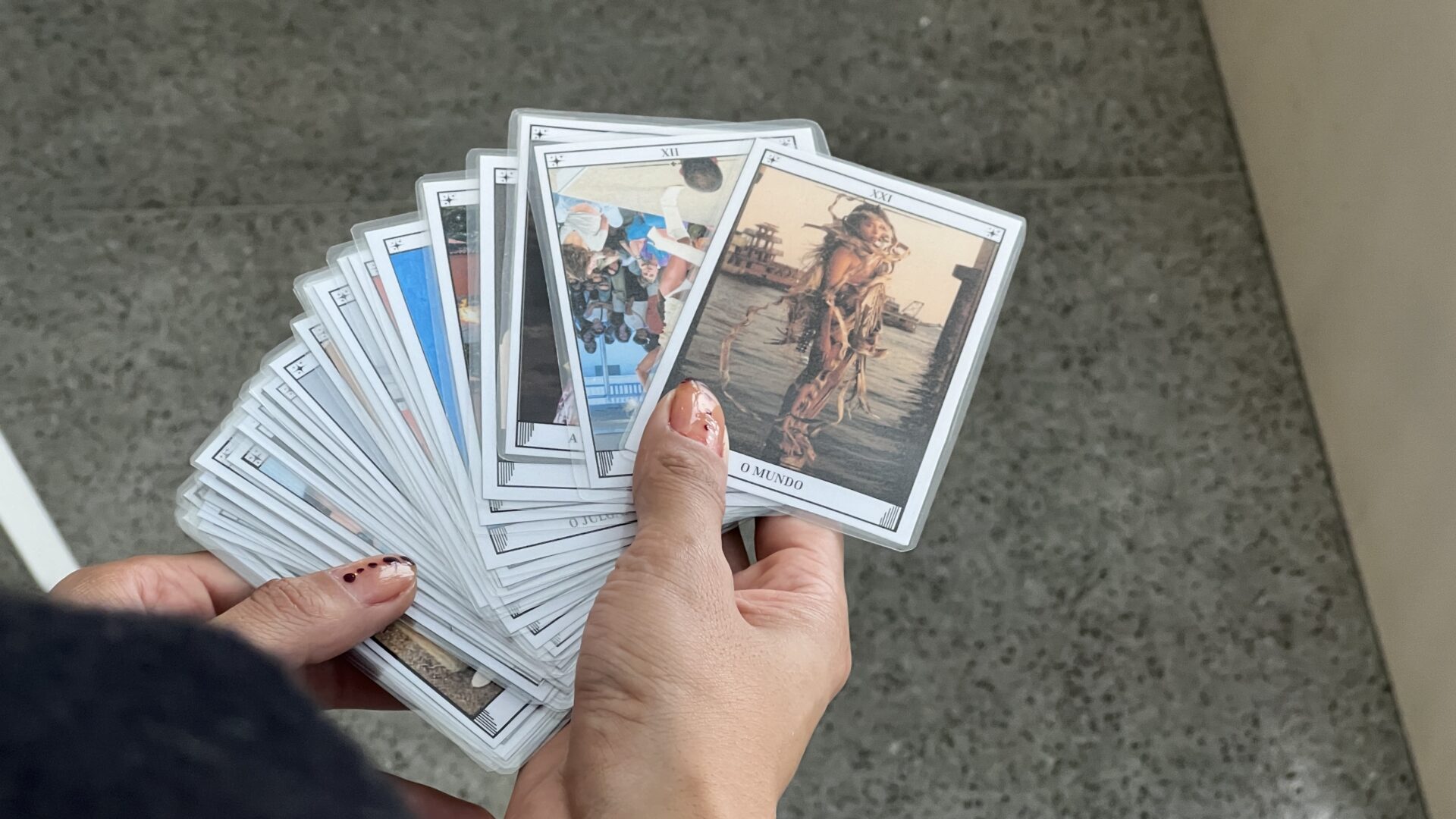
Created by educators Amanda Alves and Luna Aurora, this educational tarot deck features images of artworks from the 38th Panorama of Brazilian Art: A Thousand Degrees (2024). Inspired by the Major Arcana of the Tarot of Marseilles, the cards offer questions and possible interpretations to facilitate visitors’ engagement with the works on display. Like tarot and other divinatory practices, this device introduces an element of chance. Each reading can influence the route visitors take through the exhibition based on the cards drawn, as well as the visual and conceptual connections they make between artworks. The cards can also be used as a tool to help to create and expand on a question developed by the group, opening up new interpretations, associations, and further questions along the way.
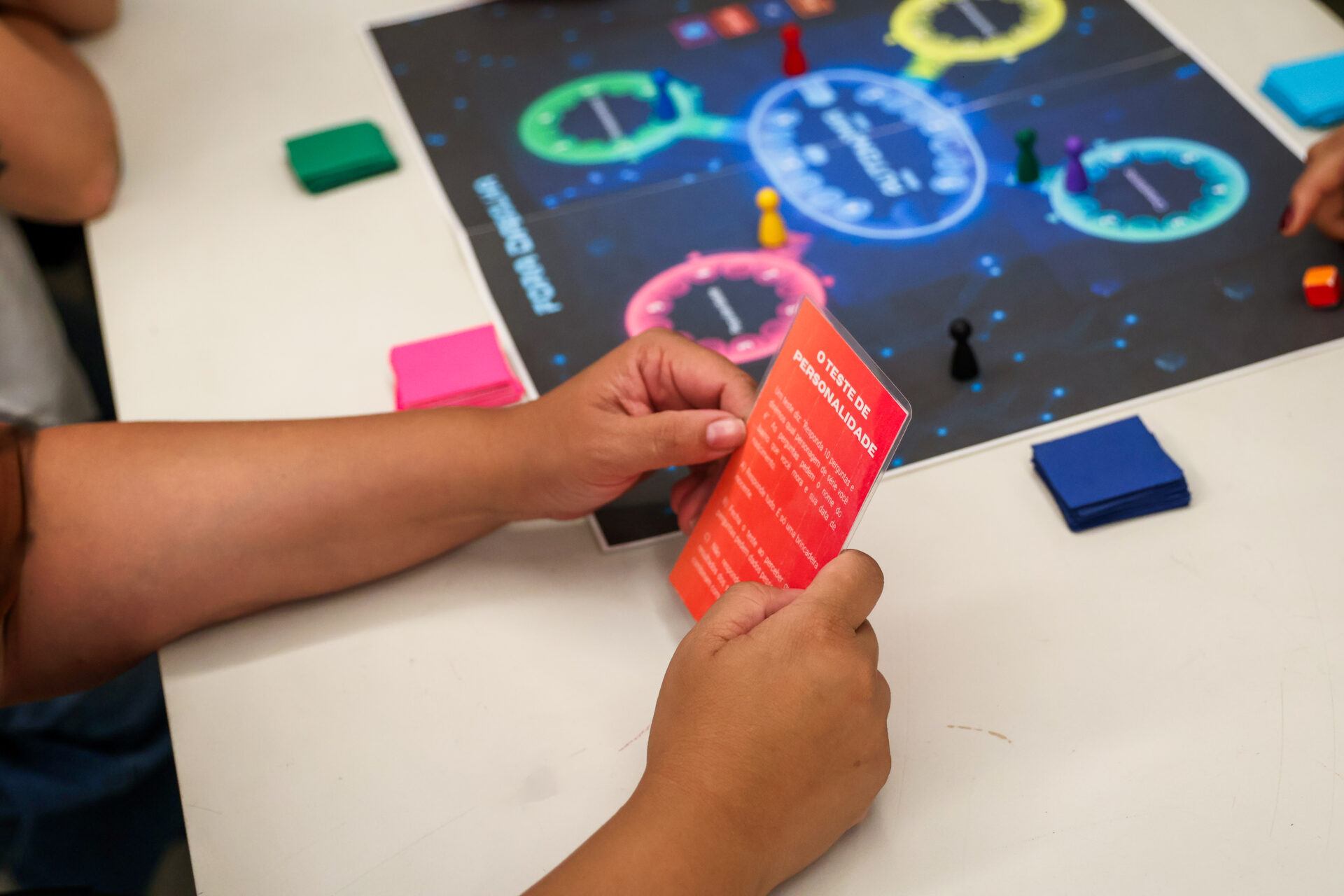
Outside the Bubble
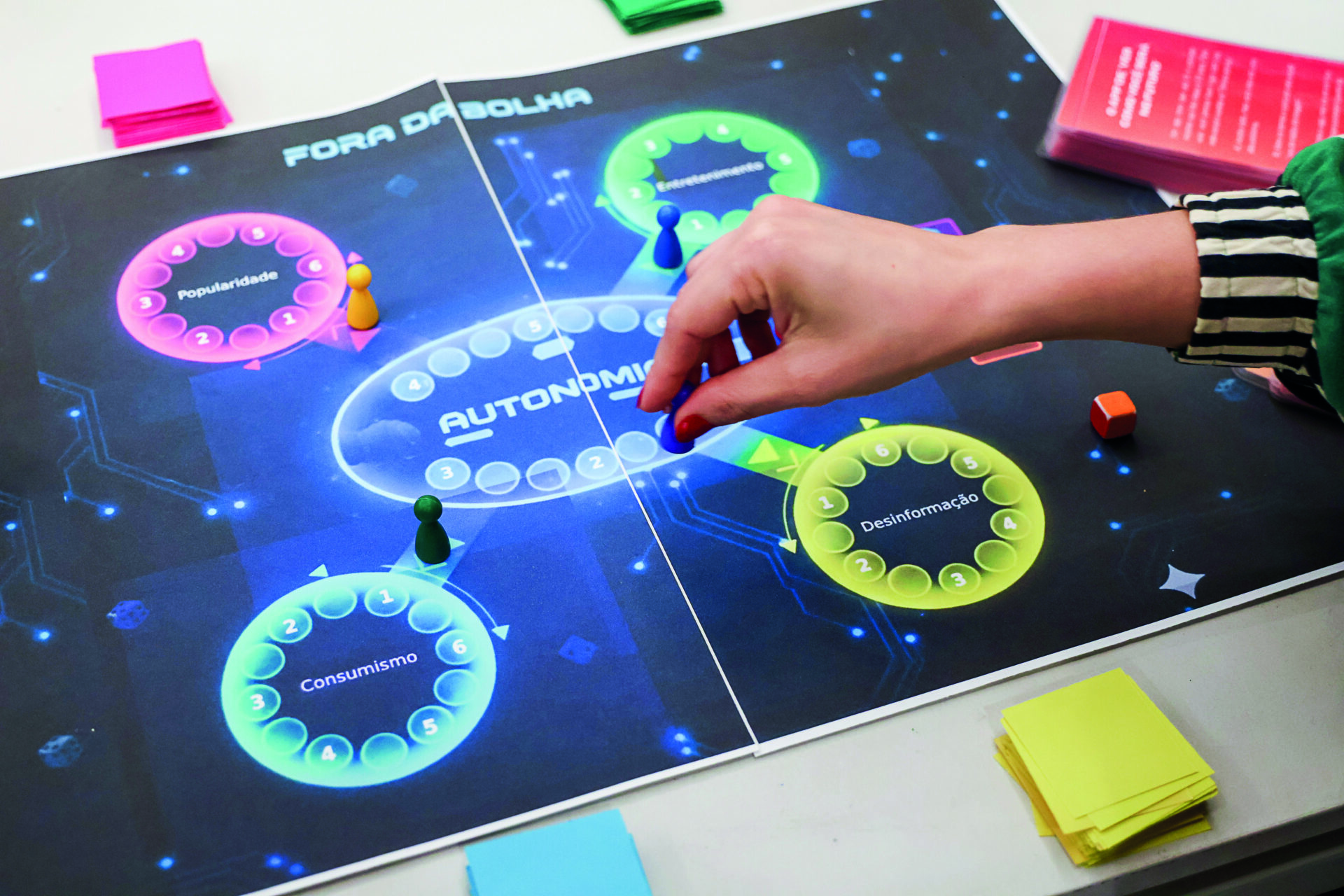
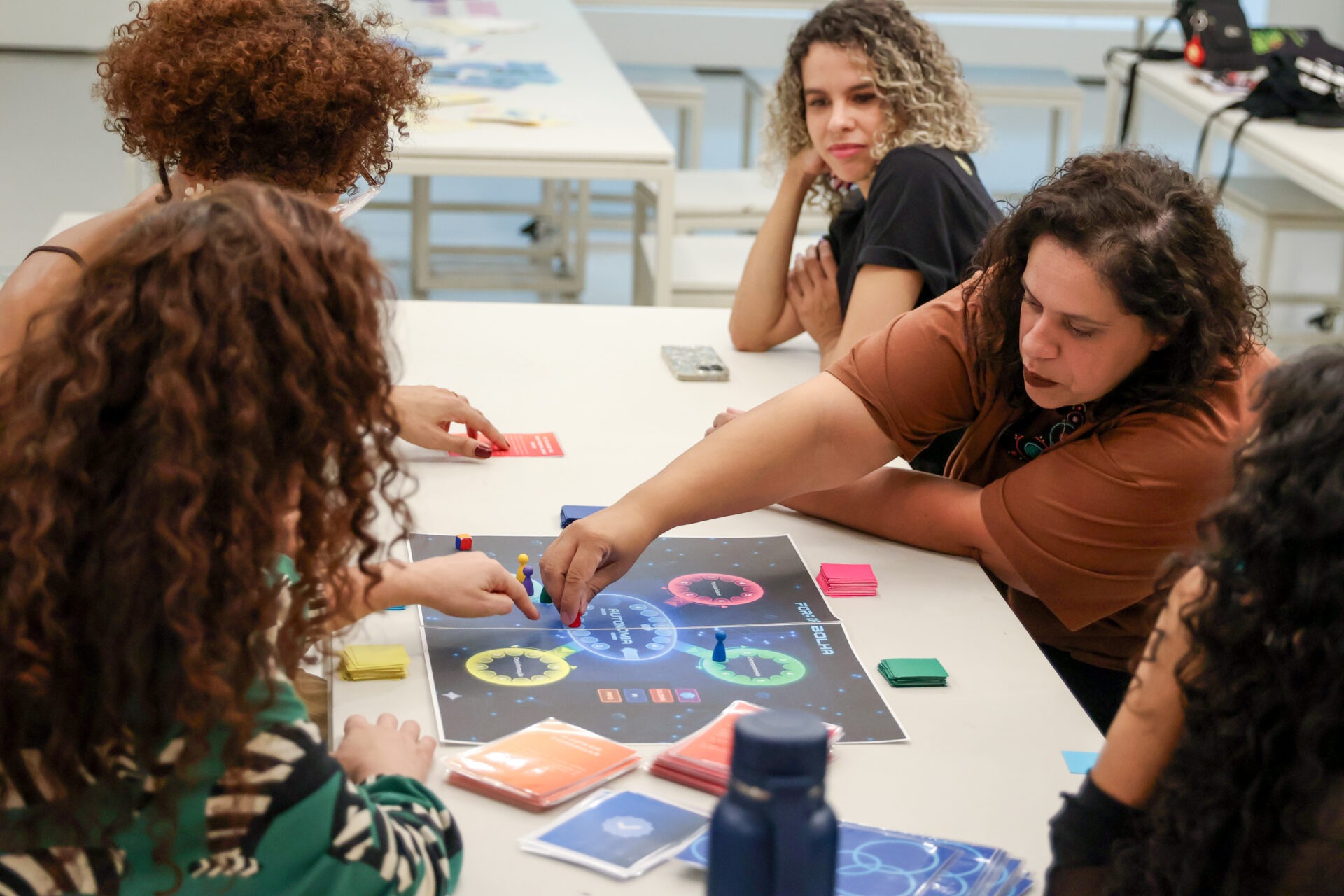
Have you ever stopped to think about how the internet actually works today? Outside the Bubble invites participants to reflect on algorithms and on how they can influence the choices we make online. The game simulates the functioning of these digital mechanisms, challenging players to navigate the bubbles of “autonomy,” “popularity,” “consumerism,” “entertainment,” and “misinformation.” Winning hinges on one’s ability to move through these environments by distinguishing between fact from misinformation and AI-generated content, while making tough calls when faced with digital dilemmas. Ultimately, the experience focuses on survival and strategic progression within a complex digital ecosystem. The game was created in 2026 by educator Maria Ferreira in collaboration with the MAM Education Department team.
Fazer e pensar arte [Making and Thinking Art] (2005)
Anna Marie Holm
The first art education publication produced by MAM São Paulo, this book reflects on the teaching of art through experimentation, creativity, and children’s freedom to create. Drawing on her work with young learners, Anna Marie Holm presents artistic practice as a space for discovery, observation, and sensory engagement. The book challenges rigid teaching methods, encouraging educators to develop more open, poetic, and inquiry-based practices in the field of art education.
Baby-Art: os primeiros passos com a arte [Baby-Art: First Steps with Art] (2007)
Anna Marie Holm
Aimed at early childhood art education, this book offers activities for young children and adults centered on drawing, painting, and hands-on engagement with a wide range of materials. Anna Marie Holm presents sensory activities and unconventional creative processes, highlighting experimentation, the joy of creation, and the discoveries shared in collective making. The book has become a key reference for artistic and sensory practices with babies and adults.
Igual Diferente [Equal and Different] (2015)
Carlos Barmak, Cássio Diniz Santiago, Cibele Lucena, Daina Leyton, Eduardo Consonni, Elisa Band, Evgen Bavcar, Fátima Freire, Joana Zatz, Karina Bacci, Milú Villela, Rodrigo Marques, Rogério Ratão, Stephan Doitschinoff, Tiago Judas, and Vera Barros.
This publication looks at diversity, coexistence, and accessibility in the cultural sphere, proposing educational practices centered on multiple ways of perceiving, engaging with, and creating meanings. Drawing on the museum’s own programming, the book discusses art, accessibility, inclusion, and cultural mediation, framing a plurality of bodies, languages, and worldviews as essential to both public life and the aesthetic experience.
Obras mediadas [Mediated Works] (2015)
Barbara Jimenez, Cibele Lucena, Daina Leyton, Diana Tubenchlak, Gregório Sanches, Laima Leyton, Leonardo Castilho, Lucas Oliveira, Mariana Trevas, and Mirela Estelles
As the first publication edited by MAM São Paulo’s Education Department, this book brings together essays by its educators reflecting on their experiences, conversations, and approaches to mediation. Drawing on works from the museum’s collection and exhibitions, the texts explore how dialogue, questions, educational tools, and participatory activities can deepen the relationship between art and its audiences. The book explores ways of fostering encounters in which interpretation, imagination, and shared experience play a central role in the appreciation of art.
Educação e acessibilidade: experiências do MAM [Education and Accessibility: Experiences at MAM] (2018)
Adriana Biancolini, Barbara Jimenez, Daina Leyton, Fernanda Zardo, Gregório Sanches, Laysa Elias, Lucas Oliveira, Luis Camnitzer, Mirela Estelles, Silvanny Rodrigues, and Zé Motta
The book presents cultural accessibility projects developed by the MAM Education Department, bringing together approaches, methodologies, and reflections on mediation, inclusion, and engagement with diverse publics. It discusses tactile resources, multisensory initiatives, educator training, and strategies for creating encounters designed to foster meaningful experiences with contemporary art, framing accessibility not simply as a technical resource, but as an ethical, aesthetic, and relational practice.
Elementar: fazer junto [Elementary: Doing it Together] (2023)
Amanda Falcão, Amanda Santos, Antônio Bispo dos Santos, Barbara Jimenez, Cauê Alves, Cristina Fernandes, Cristine Takuá, Elizabeth Machado, Fátima Freire, Gandhy Piorski, Laysa Elias, Mirela Estelles, Paul B. Preciado, and Valquíria Prates
This exhibition catalog/book investigates the power of collaboration and public participation in cultural mediation, forging a close bond between curatorial and educational work. The volume is divided into two parts: the first features the show’s curatorial texts and a series of what are termed “poetic experiences”; the second, titled “Para ler junto” [Reading Together], expands the theoretical exploration of collective living, emotions, and politics, and presents essays by guest authors.
Dez perguntas do MAM Educativo para a mediação cultural [Ten Questions by the MAM Education Department for Cultural Mediation] (2025)
Amanda Falcão, Amanda Santos, Amanza Alves, Bárbara Góes, Caroline Machado, Cauê Alves, Cintia Mello, Daniel Cruz, Leonardo Sassaki, Lucila Guedes de Oliveira, Luna Aurora, Maria Ferreira, Mariana Longo, Mirela Estelles, Pedro Queiroz, Sansorai Oliveira, Terezinha Buchebuan, and Valquíria Prates
This volume features ten essays that pose fundamental questions about contemporary cultural mediation. Rather than providing definitive answers, the book opens up a space for reflection that intersects with national and international debates, framing cultural mediation as an act of listening and embracing diversity.