From Book to Museum: MAM São Paulo and the Mário de Andrade Library
The Biblioteca Mário de Andrade [Mário de Andrade Library] and the Museu de Arte Moderna de São Paulo [Museum of Modern Art of São Paulo] share a common history. Sérgio Milliet—who directed the Library from 1943 to 1959—was instrumental in the creation of MAM São Paulo and, as its artistic director, organized the 2nd, 3rd, and 4th São Paulo Biennials, which, at the time, were held by MAM. While working with Maria Eugênia Franco in the Library’s Art Section, Milliet helped lay the groundwork for the creation of a public modern art collection—one that could offer educational exhibitions that would shape generations of artists and intellectuals, and promote the visibility of modernist art. The connection between the Library and the Museum runs deeper than Milliet’s presence in both institutions: the Library and the Museum complemented each other in promoting and institutionalizing both Brazilian and international modern art. It was in the Art Section of what was then the São Paulo Municipal Library (today the Mário de Andrade Library) that modernist works—donated by American businessman Nelson Rockefeller to encourage the founding of MAM—were first shown.
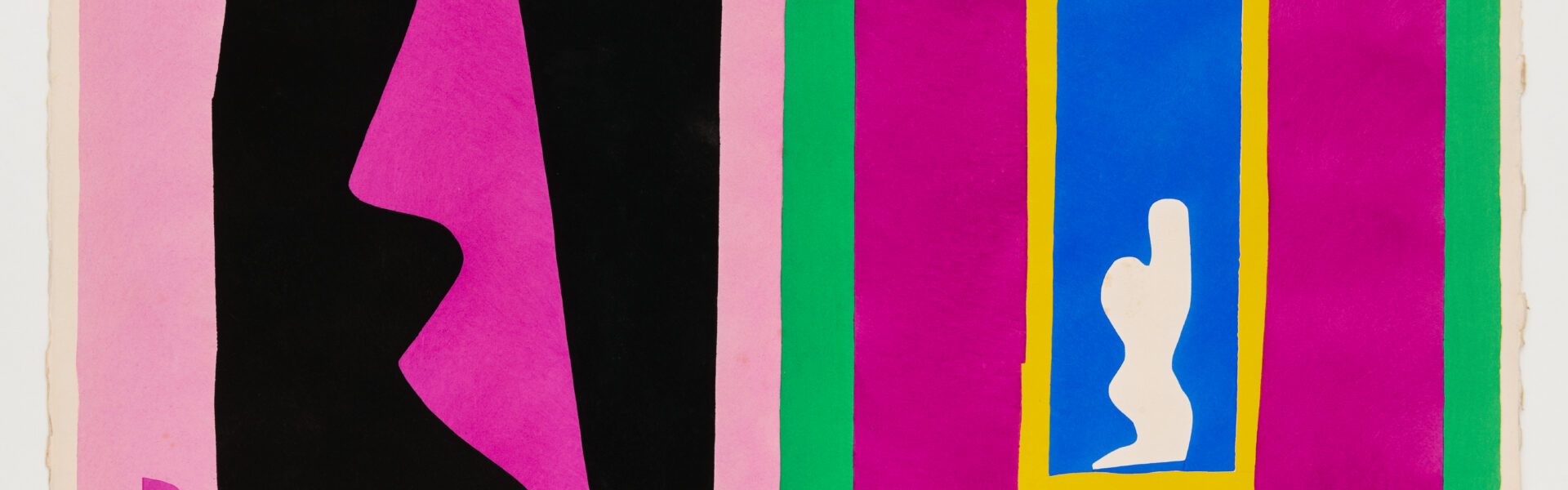
Do livro ao museu [From Book to Museum] consists primarily of works from the 1940s and 1950s—a period that marked the consolidation of modern art and the emergence of spaces and institutions dedicated to its exhibition, as well as a carefully curated selection of modern art books from the Mário de Andrade Library’s collection. Rare and significant works such as Jazz by Henri Matisse and Cirque [Circus] by Fernand Léger were instrumental in bringing Brazilian artists and scholars into direct contact with European modernism.
Examining the national production of artists’ books and albums, the partnership between MAM São Paulo and the Mário de Andrade Library also focuses on the early days of artistic printmaking. On view are artists’ editions made almost entirely by hand, including Milton Dacosta’s gouache works and Di Cavalcanti’s Fantoches da meia-noite [Midnight Marionettes], which blends prints with watercolors. The exhibition also includes the first limited-edition books with high-quality prints produced by the Sociedade dos Cem Bibliófilos [Society of One Hundred Bibliophiles], a group founded and led by art collector Raymundo de Castro Maya in 1943.
The exhibition also includes works from the MAM São Paulo collection that reflect the tensions within Brazilian modern art, a period marked by a sharp debate between abstraction and figuration. This discussion was already evident in the museum’s inaugural 1949 exhibition, Do figurativismo ao abstracionismo [From Figurativism to Abstractionism]. Sérgio Milliet, whose self-portrait is featured in the show, consistently advocated for the free experimentation of modern artistic language, despite never committing to a definitive position on the matter—a stance that often led to misunderstandings. From Book to Museum also explores the rise of the concrete avant-garde in the 1950s, which opposed informal abstraction, charting the many meanings and avenues of Brazilian modern art during that period.
Although the library and the museum have different functions, they were founded side by side, historically united by a shared mission to preserve, organize, and share knowledge. They are more than just guardians of material and intangible heritage; they are vibrant spaces for encounter and learning—fostering research, reflection, and the imagination. From Book to Museum is a part of the Mário de Andrade Library’s centennial celebrations: the exhibition not only explores the common origins of these two important institutions, but it also paves the way for future collaborations and partnerships.
Cauê Alves and Pedro Nery Museum of Modern Art of São Paulo
Henri Matisse
Jazz, by Henri Matisse, is a landmark work from the artist’s late career. Matisse began working on the book in 1943, after medical procedures left him with limited mobility, which prompted him to “paint with scissors.” Created at the height of World War II, during the Nazi occupation of France, Jazz features images marked by a powerful ambiguity, shifting between the enchantment of the circus and the violence of war. Known for using color to convey a subjective happiness born from moments of abrupt intensity, Matisse infused Jazz with a sense of urgency: the blood red of mutilation, the yellow bursts of explosions, the mark on the heart, or the mournful procession. These collages continue to produce a sense of rapture through the interplay of colors and deceptively simple themes. The works add the bold graphic quality of the paper cutouts to the impassioned fervor with which Matisse faced violence. (P.N.)
Bestiaries
During the 1940s and ’50s, the Municipal Library’s Art Section was a hub for artists and thinkers. With MAM, MASP, and the Library located so close together, the frequent movement of artists between them is well documented. Many were known to frequent the Library, including Marcello Grassmann. The Art Section’s graphic works, viewed and acquired by Milliet and Franco, fostered an atmosphere of intellectual exchange. The French artist Jean Lurçat also appears to have been part of this environment during his visits to Brazil in the 1950s, which culminated in an exhibition of his works at MASP in 1954 and a portrait of the artist painted by Flávio de Carvalho. Therefore, it is no mere coincidence that we have two bestiaries by these artists, works that converge in their graphic experimentation and capture an imaginary world associated with the imaginal tensions of premodern periods. In doing so, they suggest an alternative, noncanonical artistic vision through the form of the bestiary, which alludes to the medieval literary genre. (P.N.)
Society of One Hundred Bibliophiles
The Sociedade dos Cem Bibliófilos [Society of One Hundred Bibliophiles] was founded in 1943 under the leadership of collector Raymundo Castro Maya. The group’s goal was to publish numbered editions of Brazilian literary classics illustrated by renowned artists. A single copy of each edition was always sent to the Municipal Library of São Paulo. To make the project viable, Maya established his own fine-arts press, which was supported by Brazilian printmakers. Among them was Luiz Portinari, brother of the painter Candido Portinari, whom Maya sent to France to perfect his printmaking techniques. The collection stands out for its selection of Brazilian modern artists and for its development of high-quality printing in the production of limited-edition artist’s books. This experiment with leading artists led to the creation of the first artists’ books and helped reshape our understanding of Brazilian modern art. (P.N.)
The Urban Environment and the Modern Image
The Belgian graphic artist Frans Masereel is best known for his books that build narratives using images alone. His groundbreaking work in the 1920s and ’30s treated the image not as a mere illustration of text, but as a story in itself. His visual language embraced modern themes, depicting war, urban movement, and other subjects. In Mon livre d’images [My Book of Images], from 1956, Masereel took this further, abandoning narrative elements altogether to allow the images to become completely autonomous. This approach also sheds light on the albums of Carlos Prado and Manoel Martins, who likewise drew on the urban environment to create works that increasingly moved beyond mere narrative or documentary concerns, reflecting instead the individual’s experience of the modern city. As narrative content is de-emphasized, formal qualities take on a distinctive importance—a development that is not at odds with abstraction but instead allows for new interpretations of figurative painting and even photography.
Milliet himself proposed that the modern experience should never be dogmatic; rather, its distinction lay in the possibility of free experimentation. (P.N.)
Modern Illustrations
Emiliano Di Cavalcanti’s 1920 illustrations for Ribeiro Couto’s Fantoches da meia-noite [Midnight Marionettes] are a cornerstone of Brazilian modern art and a major artistic event that preceded the 1922 Modern Art Week. The artist depicts bohemian and nocturnal figures suspended like marionettes on strings, with clear references to European avant-garde movements like cubism and expressionism. Using a limited color palette and an intimate tone, the drawings convey a sense of melancholy. Candido Portinari’s 1943 illustrations for Memórias póstumas de Brás Cubas [The Posthumous Memoirs of Brás Cubas] are infused with a darker, almost grotesque atmosphere. In close dialogue with Machado de Assis’s literary work, Portinari uses biting humor and exaggerated lines that underscore the novel’s social critique. The illustrations function not as simple accompaniments, as it were, but as powerful visual commentaries in their own right. (C.A.)
Fernand Léger
Published in 1950, Fernand Léger’s book Cirque [Circus] features a series of unbound lithographs that together form a visual essay. The artist uses vibrant colors to engage with everyday life and popular culture through the circus. While his paintings often employ more rigid forms, the circus drawings are dominated by curved lines. With simplified and geometric shapes, Léger captures the vitality and movement of trapeze artists, jugglers, acrobats, clowns, and animals. Poet Blaise Cendrars introduced Tarsila do Amaral to Léger in 1923, and she visited his studio in Paris, where she acquired one of his works. This contact proved significant for both her own artistic development and the course of modern art in Brazil. (C.A.)
Informal Abstraction
Fayga Ostrower was a pioneer of abstract printmaking whose illustrations appeared in numerous books and periodicals. In the 1950s, her work took a decisive turn toward abstraction, eventually developing a mature style marked by a rigorous yet highly expressive formality. Though she never abandoned her artistic freedom, her work echoed the style of the so-called “informal” or “lyrical” abstraction, a movement known for its heightened subjectivity and expressiveness. Maria Martins is best known as a surrealist sculptor, but she was also a significant printmaker. Her drawings, like her sculptures, draw on mythological themes and Amazonian legends, earning her international acclaim during her lifetime. Arthur Luiz Piza finds a balance in his prints between the freedom of informal abstraction and a geometric structure, seeking to reconcile rationalism with lyricism, creating his compositions from small fragments, with works that resemble mosaics and feature multidirectional rhythms and subtle relief effects. (C.A.)
Geometric Abstraction
In the 1950s, Samson Flexor established the Atelier-Abstração in his São Paulo home. Serving as a hub for young artists, the studio promoted a mathematically rooted form of geometric abstraction. In 1954, the group held an exhibition at MAM São Paulo. Meanwhile, in Rio, courses taught by Ivan Serpa at MAM Rio de Janeiro led to the formation of Grupo Frente, which included several pioneers of geometric abstraction. This growing movement culminated in the 1ª Exposição Nacional de Arte Concreta [1st National Exhibition of Concrete Art], hosted by MAM São Paulo in 1956. The show brought together artists and poets from both cities—including Grupo Ruptura, Judith Lauand, and Lothar Charoux—all of whom advocated for an objective art based on clarity and intellectual rigor. The exhibition, however, also highlighted the differences between the São Paulo and Rio schools or movements. In 1959, the Rio-based artists responded by launching neoconcretism, a movement that sought to reintroduce expressive elements into concrete art. Though Milton Dacosta never formally joined either group, he embraced abstraction during his later period, producing artworks that reflected a constructivist sensibility. (C.A.)
Sérgio Milliet
Sérgio Milliet holds a distinctive place in Brazilian art history. A leading figure of Brazilian modernism—working as a writer, poet, critic, and painter—Milliet was also instrumental in the early history of the Museum of Modern Art of São Paulo (MAM São Paulo) and the Mário de Andrade Library. Educated in Switzerland and Paris in the early 20th century, Milliet was introduced to modern art at an early age. He became a key figure in disseminating European avant-garde movements in Brazil from the 1920s through the 1960s. As a poet, he participated in the landmark 1922 Modern Art Week in São Paulo. Milliet’s efforts were crucial to the institutionalization of modern art in Brazil. The creation of the Art Section of the Mário de Andrade Municipal Library in 1945, the founding of the Brazilian Association of Art Critics (ABCA) in 1949, the establishment of MAM São Paulo in 1948, and the inauguration of the São Paulo Biennial, in 1951. This exhibition includes his self-portrait. (C.A.)
Photography and Avant-Garde of MAM São Paulo
Photography—particularly modern experimental approaches—is well represented in the collection of the Museum of Modern Art of São Paulo (MAM São Paulo). During the 1940s and 1950s, a period marked by the institutionalization of modern art in Brazil, artists such as Alberto da Veiga Guignard, Geraldo de Barros, and Thomaz Farkas played a vital role in renewing photographic language.
The broader debate between figuration and abstraction, which defined the art of the era, comes to life in Geraldo de Barros’s work, of which his landmark 1950 series Fotoformas is a prime example. Employing solarization, manipulation, and superimposition, his art directly engages with the constructive avant-gardes, cubism, and abstraction.
Thomaz Farkas framed urban space using geometric forms and unconventional angles. By focusing on the daily life of major urban centers like São Paulo, his photography challenged traditional compositional standards. The resulting images hover between documentary realism and a geometric abstraction rooted in Brazil’s own urban landscape.
On the other hand, Alberto da Veiga Guignard gravitated toward surrealism, departing from the constructive geometric tradition. His photomontages explore the tension between the real and the imagined, the conscious and the unconscious, delving into a mystical universe far removed from strict rationalism. More than mere documentation, these modern photographic experiments provided new ways to imagine and engage with the world. (C.A./P.N.)